

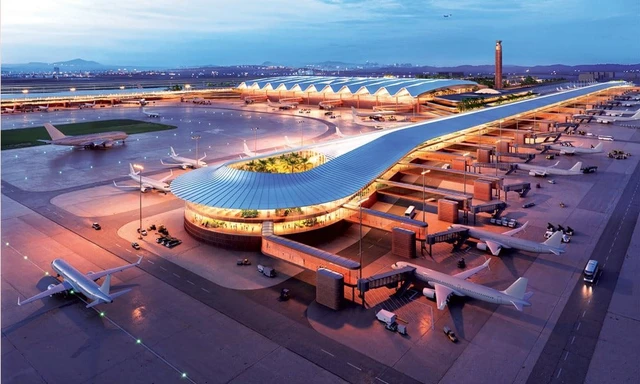
Vietnam is preparing to develop one of its most ambitious infrastructure projects to date, a nearly $8 billion “smart and green” international airport designed to meet top tier global standards.
The proposed Gia Binh International Airport is expected to redefine how airports are built and operated in Vietnam, with a focus on sustainability, technology, and passenger experience. If completed as planned, it aims to rank among the world’s top 10 five star airports.
A Next Generation Airport Concept
Unlike traditional airport expansions, Gia Binh is being designed as a fully integrated aviation ecosystem.
Key features include:
- Total investment of about VND 196 trillion, roughly $8 billion
- Land area of nearly 1,900 hectares
- ICAO 4F standard, capable of handling the largest wide body aircraft
- Four runways designed for independent operations
The project is positioned not just as an airport, but as a long term aviation hub for northern Vietnam.
Capacity and Scale
The scale of the project reflects Vietnam’s rapidly growing air travel demand.
Planned capacity includes:
- 30 million passengers per year by 2030
- 50 million passengers per year by 2050
- Cargo handling capacity of up to 2.5 million tons annually
The airport will also include a major aircraft maintenance and overhaul center, positioning it as a regional hub for aviation services in Asia Pacific.
Built as a “Green and Smart” System
A defining feature of Gia Binh is its integrated design approach.
The airport will combine:
- Smart technologies for operations and passenger flow
- Sustainable infrastructure aligned with environmental goals
- Multi modal transport connections linking road, rail, and urban transit
- Commercial, logistics, and service zones within a unified masterplan
The goal is to create a seamless travel experience while reducing environmental impact.
Strategic Role for Northern Vietnam
The project is expected to play a critical role in reshaping the region’s infrastructure landscape.
- It will help ease congestion at Noi Bai Airport, which is nearing capacity
- It will support economic growth in the greater Hanoi region
- It is planned as a dual use facility, serving both civilian and strategic purposes
Notably, the airport is also expected to support major international events, including APEC 2027.
Why This Matters
Vietnam’s aviation sector is entering a new phase of expansion, driven by:
- Rapid growth in passenger demand
- Increasing international connectivity
- Rising importance of logistics and cargo transport
Large scale projects like Gia Binh signal a shift toward long term, high capacity infrastructure planning rather than incremental upgrades.
Bottom Line
Gia Binh International Airport represents a bold attempt to position Vietnam among the world’s leading aviation hubs.
If executed successfully, it will not only expand capacity but also redefine standards for sustainability, technology, and passenger experience in the region.
Related
Discover more from Vietnam Insider
Subscribe to get the latest posts sent to your email.
Source: Vietnam Insider