

Key findings:
-
Starting 1st January 2022, the new Law on Environmental Protection 2020 (LOEP 2020) will take effect, replacing the current Law on Environmental Protection 2014.
-
The new LOEP 2020 introduces a new master license, a narrower range of environmental projects, an updated waste and harmful products list and an introduction to strict policies on emissions trading system and carbon tax.
-
LOEP 2020 is considered to be the most fundamental and practical provision so far that meets the urgent requirements from both the environment and economic development.
Project classification
Under the new law, there are several environment criteria to classify any investment project, including (1) Production, business or services with a risk of causing environmental pollution; Scale and capacity, (2) Use of land, water surface and sea; Exploitation of natural resources; (3) Sensitive environmental factors and Others. By using these updated criteria, projects will be determined whether it is subject to Environment impact preliminary assessment (EIPA), environment impact assessment (EIA) or environment permit.
 100vw, 1000px” data-recalc-dims=”1″></p>
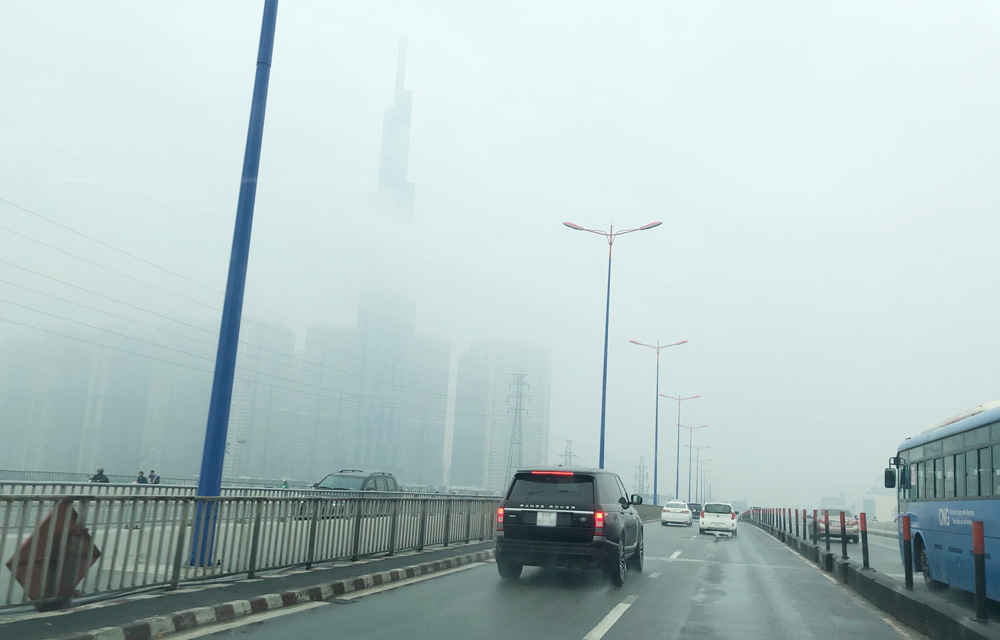
<p id=) Air pollution is responsible for 60,000 deaths in Vietnam
Air pollution is responsible for 60,000 deaths in Vietnam
Projects under Group I (High risk, 8 types) are required to follow more management measures, including preliminary environmental impact assessment (Article 29) during construction investment pre-feasibility study, request for investment policy approval, investment policy proposal and investment policy approval; environmental licenses (Article 39) for discharging wastewater projects; environmental impact assessment (Article 30) during feasibility study.
Projects under Group II (Medium risk, 7 types) are not required to conduct preliminary environmental impact assessment, and environmental impact assessment is only compulsory for certain types.
Projects under Group III (Minor risks, 2 types) do not need to do either preliminary environmental impact assessment or environmental impact assessment. In the case of wastewater discharging, dust or emissions, environmental licenses from local competent authorities are necessary.
Group IV (Nil, 1 type) projects needs to get environmental registration in the case of discharging waste (Article 49).
Under the new law, investment projects are required to apply the four management tools on environmental protection in relation to the investment and operation of the projects:
- Preliminary Environmental Impact Assessment: To be conducted during the pre-feasibility study, investment in-principle seeking or investment policy approval stages. (Group I)
- Environmental Impact Assessment: To be conducted at the same time as the feasibility study report. (Group I, some of Group II)
- Environmental License: Based on the types of the projects, an Environmental Licence is required before trial operation or the insurance of other approvals. (Group I, II, III)
- Environmental Registration: Based on the types of the projects, an Environmental Registration is required before official operation, waste discharge and other construction permits. (Group I,II,III, IV)
Environmental permits and audit
This is the first time that Environmental audits are introduced in the Environmental Law in Vietnam. The new Environmental permits are applied to enhance environmental protection in the use of resources, importing scrap from overseas for raw materials, pollution control and waste management. Depending on the type of the projects, environmental permits will be valid for 7 to 10 years. The focus areas include:
- Investment projects of Group I – III that generate wastewater, dust and emissions into the environment that much be treated, or hazardous waste that must be managed accordingly.
- Investment projects, establishments, concentrated production, businesses and services zones that have been operating before the effective date of the new law, that have the same environmental criteria as the first group.
Under Article 74, environmental audit is used as an instrument to help investors to study changes in input factors of the production process, in order to identify the best measures to improve production efficiency and waste treatment. By applying environmental audit correctly, project managers can be more independent and active in managing environmental issues, measuring levels of pollution to generate the most effective measures and practices.
Circular economy and solid waste management
</p>
<p> ” data-medium-file=”https://i1.wp.com/vietnaminsider.vn/wp-content/uploads/2019/12/plastic_waste_collected.jpg?fit=300%2C190&ssl=1″ data-large-file=”https://i1.wp.com/vietnaminsider.vn/wp-content/uploads/2019/12/plastic_waste_collected.jpg?fit=620%2C392&ssl=1″ loading=”lazy” class=”size-full wp-image-28343″ src=”https://vietnamstar.net/wp-content/uploads/2021/10/towards-a-more-sustainable-future-with-the-2020-law-on-environmental-protection-1.jpg” alt width=”620″ height=”392″ srcset=”https://vietnamstar.net/wp-content/uploads/2021/10/towards-a-more-sustainable-future-with-the-2020-law-on-environmental-protection-5.jpg 620w, https://vietnamstar.net/wp-content/uploads/2021/10/towards-a-more-sustainable-future-with-the-2020-law-on-environmental-protection-6.jpg 300w, https://vietnamstar.net/wp-content/uploads/2021/10/towards-a-more-sustainable-future-with-the-2020-law-on-environmental-protection-7.jpg 585w” sizes=”(max-width: 620px) 100vw, 620px” data-recalc-dims=”1″></p>
<p id=) Plastic waste collected at Hai Cang ward, Quy Nhon city (Photo: VNA)
Plastic waste collected at Hai Cang ward, Quy Nhon city (Photo: VNA)
LOEP 2020 also marks the introduction of the Circular Economy concept, in which new resources exploitation is minimised through innovative design, advanced production and responsible consumption activities. This is a big step, transforming the current linear economy into a more sustainable one.
Additionally, there are new points related to solid waste management regime. Article 54 focuses on the responsibility of producers and importers in recycling products and packagings, in response to the alarming rate of single-use packing waste in Vietnam. Meanwhile, Article 79 clearly guides on the payment for service charges for collection, transportation and treatment of domestic solid wastes based on volume. Businesses have the choice to either implement a full recycling process in-house or to contribute financially to the Vietnam Environment Protection Fund as a way to support their recycling process.
Conclusion
The 2020 LOEP has shown the great effort of Vietnamese Government in promoting a more sustainable development while maintaining a positive economic growth. This movement is a necessary step to catch up with the sustainability trends of other countries, while building a strong framework for businesses and individuals to develop more sustainably. Without doubt, the new Law will need great supports from stakeholders at all levels, from each family, local communities to foreign investors and the government, so that a harmonious, sustainable co- existence between the nature and humans could be achieved in Vietnam.
By Pham Tram Anh
“Trâm Anh is a Hanoi-based sustainability promoter and writer. She is on the mission to create a sustainability movement for SMEs in Vietnam. She is the founder of Good Human, an environmental group with engaging contents and campaigns related to sustainability and circular economy. Get in touch with Trâm Anh at tramanh.pham161@gmail.com for collaboration and partnership!
Related
Source: Vietnam Insider