

Controversial figure who turned Samsung into a global tech power
Chairman of South Korea’s conglomerate Samsung Group Lee Kun-hee died at a hospital in Seoul on Sunday, according to South Korea’s Yonhap news agency.
Samsung Electronics has announced the death of its chairman, Lee Kun-hee. The company says he died on October 25th with family including his son, vice-chairman Lee Jae-yong, at his side. He was 78.
A cause of death was not given, but Lee had been incapacitated for many years after suffering a heart attack in 2014, causing him to withdraw from public life. Lee Jae-yong, also known as Jay Y. Lee, had been widely assumed to take over upon his father’s passing and has been viewed as the de facto leader in recent years.
“THE MOTIVATING DRIVER OF THE COMPANY’S VISION”
Lee Kun-hee was a controversial figure who played a huge part in pushing Samsung from a cheap TV and appliances maker to one of the most powerful technology brands in the world. He became the richest man in South Korea, with the Samsung group contributing around a fifth of the country’s GDP. In its statement, Samsung says that Lee’s declaration of “new management” in 1993 was “the motivating driver of the company’s vision to deliver the best technology to help advance global society.”
Lee also found himself in legal trouble. He was found guilty of bribing President Roh Tae-woo through a slush fund in 1995, and of tax evasion and embezzlement in 2008, but was formally pardoned for each conviction. The second pardon came in 2009 and was made “so that Lee could take back his place at the International Olympic Committee and form a better situation for the 2018 Olympics to take place in Pyongchang,” South Korea’s justice minister said at the time.
Lee’s passing will reignite inevitable speculation over the succession process. While Lee Jae-yong has long been groomed to become chairman, he’s had legal issues of his own since his father’s incapacitation, spending almost a year in jail for his role in the corruption scandal that brought down former South Korean president Park Geun-hye. South Korean law also means that anyone assuming Lee’s assets will face paying several billion dollars in inheritance tax, which may force them to reduce their stake in the company.
Samsung is one of the biggest firms in Vietnam
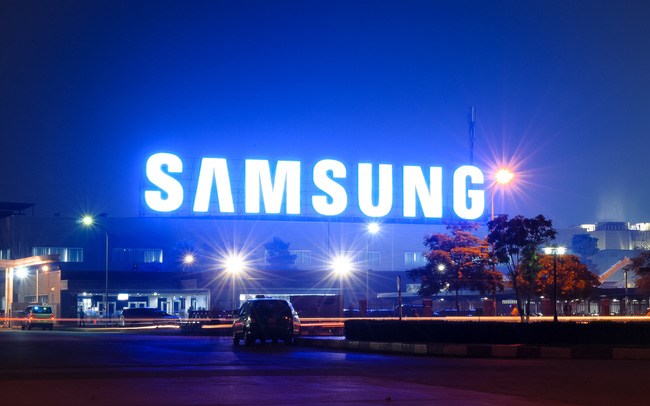
Samsung Electronics’ factories in Vietnam produce almost a third of the firm’s global output. The company has invested a cumulative $17bn in the country.
But Samsung is as important to Vietnam as Vietnam is to it. Its local subsidiary’s $58bn in revenue last year made it the biggest company in Vietnam, pipping PetroVietnam, the state oil company. It employs more than 100,000 people. It has helped to make Vietnam the second-biggest exporter of smartphones in the world, after China. Samsung alone accounted for almost a quarter of Vietnam’s total exports of $214bn last year.
All this has been a huge boon to Vietnam’s economy. Despite unflattering reports about working conditions in Samsung’s factories, Thai Nguyen and another nearby province that hosts one, Bac Ninh, have become two of the country’s richest. Restaurants, shops and hotels have mushroomed around their industrial zones. The number of local firms listed as important suppliers to Samsung has increased sevenfold in the past three years.
And Samsung is just the biggest South Korean investor in Vietnam. Of the $108bn of foreign direct investment (FDI) Vietnam has received since it joined the World Trade Organisation (WTO) in 2007, a third originated in South Korea. LG Electronics, another South Korean giant, makes television screens in a $1.5bn factory in the port of Haiphong. Lotte, a South Korean conglomerate, owns a string of supermarkets.
Related
Source: Vietnam Insider