

Behind the data warnings, Vietnam’s paradox-driven growth keeps defying Western logic
At a time when global investors are obsessing over recession risks, fragile supply chains, and emerging-market debt, Vietnam stands out for all the wrong—and right—reasons. Despite repeated warnings from rating agencies and analysts trained in Western economic models, the country continues to function, grow, and absorb shocks in ways that defy conventional forecasting. Understanding Vietnam’s economy today may require looking less at spreadsheets—and more at its streets.
This paradox came into sharp focus during a recent discussion among Hong Kong-based fund managers, where Vietnam’s near-term outlook sparked unease. Vietnam has been flagged by Moody’s Investors Service among the world’s most unstable sovereign bond profiles, reflecting structural vulnerabilities, opaque balance sheets, and macroeconomic imbalances. On paper, the warning signs are unmistakable. Yet in practice, Vietnam continues to move forward, albeit unevenly, much like its famously congested traffic.
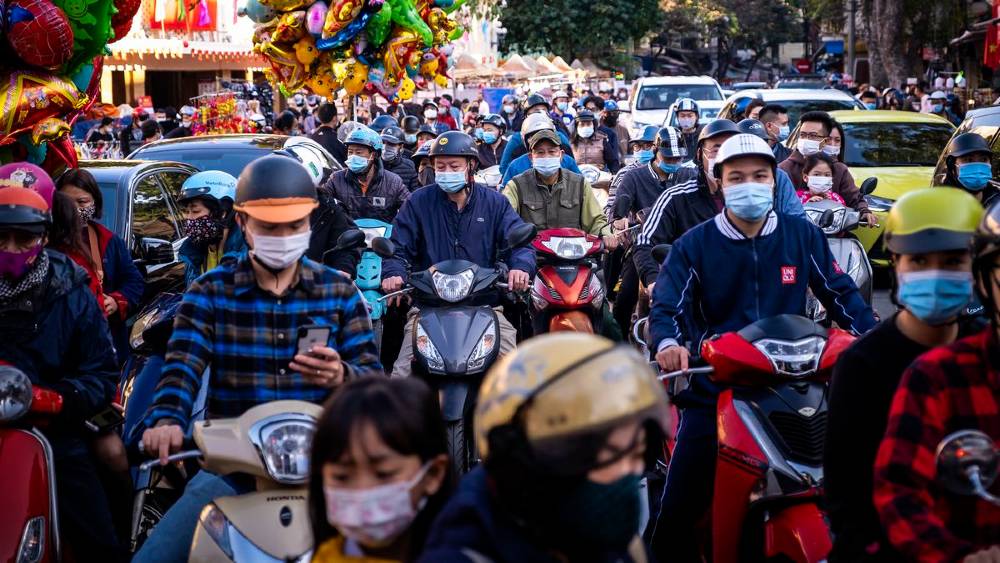
What surprises international visitors most about Vietnam is not its beaches, heritage sites, or cuisine, but the overwhelming flow of motorbikes in Ho Chi Minh City and Hanoi. The traffic appears chaotic, rule-light, and permanently congested—yet it works. Accidents are fewer than expected, road rage is rare, and millions of people navigate daily life through patience, improvisation, and mutual tolerance. Progress is slow, but it happens.
Vietnam’s economy mirrors this system almost exactly. Real estate transactions account for roughly one-third of GDP. Remittances and external transfers contribute nearly half of foreign exchange inflows. The country imports massive volumes of raw materials only to re-export finished goods, embedding Vietnam deeply into global manufacturing chains while limiting domestic value capture. Households hold an estimated 1,000 tons of gold—equivalent to more than half of GDP—outside the formal financial system, while banking remains the most profitable sector despite limited transparency by international standards.
These contradictions extend beyond numbers. State-owned enterprises are designated as the backbone of the economy, yet the country’s wealthiest individuals emerge from the private sector. Environmental and public health risks dominate daily concerns, while alcohol and tobacco remain among the cheapest and most widely consumed products. Formal bankruptcy is rare, not because firms are healthy, but because failure is socially and administratively discouraged until all obligations are settled.
For global investors, the key takeaway is not that Vietnam is risk-free—far from it—but that traditional Western analytical frameworks consistently underestimate the country’s adaptive capacity. Vietnam’s economic actors, from households to entrepreneurs, operate with informal buffers: family networks, cash savings, gold reserves, and social flexibility. When shocks hit, adjustment comes through delay, dilution, and improvisation rather than collapse.
Vietnam does not sprint like developed markets. It crawls, weaves, and inches forward, absorbing friction along the way. For those willing to accept slower velocity, higher noise, and structural opacity, Vietnam offers something rare in today’s global economy: a system that survives not because it is efficient, but because it is resilient. The real question for international readers is not whether Vietnam fits global models—but whether global models are ready for Vietnam.
Related
Discover more from Vietnam Insider
Subscribe to get the latest posts sent to your email.
Source: Vietnam Insider