

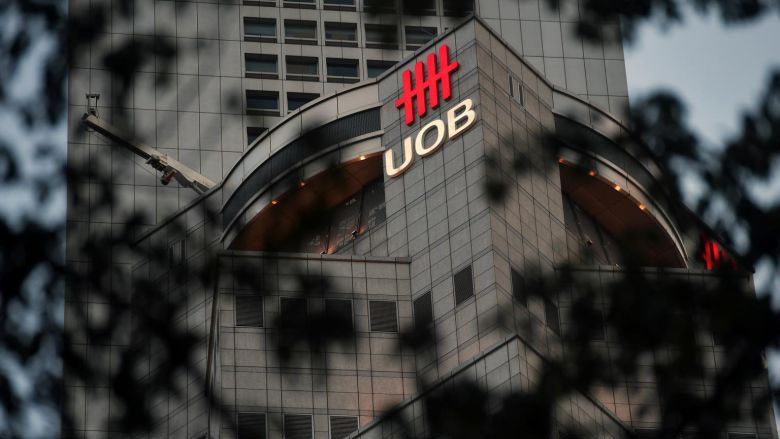
The move marks a milestone for Vietnam’s new International Financial Center as it courts global capital and expertise.
Vietnam has taken a decisive step toward becoming a regional financial hub, announcing that United Overseas Bank (UOB) will be the first foreign bank to establish a presence in the country’s newly created International Financial Center (IFC). Construction of UOB’s headquarters in Ho Chi Minh City is expected to begin soon, signaling early international confidence in Vietnam’s ambitions to attract high-quality financial flows.
The announcement was made during an official visit to Singapore by Vietnam’s Deputy Prime Minister Nguyen Hoa Binh, who described the IFC as a strategic platform to mobilize capital, talent, and advanced financial services for Vietnam’s next development phase. The center will operate under a “one center, two destinations” model, anchored in Ho Chi Minh City with a complementary hub in Da Nang.
UOB’s entry carries symbolic and practical weight. The Singaporean lender was the first bank from Singapore to establish a representative office in Vietnam in 1992, followed by a wholly foreign-owned branch in 1995. Its decision to anchor operations inside the IFC reinforces Vietnam’s credibility as it transitions from an emerging market to a more sophisticated financial ecosystem.
Vietnam’s IFC was formally approved by a National Assembly resolution in June and operationalized by a government decree in December. Authorities say Ho Chi Minh City has already engaged more than 50 investors and founding partners for the initial phase. Domestic heavyweights including Vietcombank, VietinBank, and MB Bank have confirmed participation, while Da Nang has issued expressions of interest to multiple local banks—underscoring a hybrid model that blends domestic strength with foreign expertise.
Singapore has welcomed the move. Deputy Prime Minister Gan Kim Yong called the IFC a timely decision and pledged support in areas ranging from regulatory design to supervision and talent development. He emphasized the need for a strong role for the central bank and domestic lenders, paired with deep cooperation with foreign institutions and robust legal frameworks.
The broader context matters. Singapore is currently the largest ASEAN investor in Vietnam and the second-largest overall, with more than 4,400 active projects worth over US$90 billion. Flagship initiatives such as the Vietnam–Singapore Industrial Parks (VSIP) network already span 14 provinces, and cooperation is expanding into energy, digital technology, carbon markets, and next-generation industrial zones.
With UOB breaking ground first, the test for Vietnam’s International Financial Center will be whether early momentum can translate into a critical mass of global banks, funds, and fintech players—turning ambition into a functioning regional financial gateway rather than a symbolic address.
Related
Discover more from Vietnam Insider
Subscribe to get the latest posts sent to your email.
Source: Vietnam Insider