

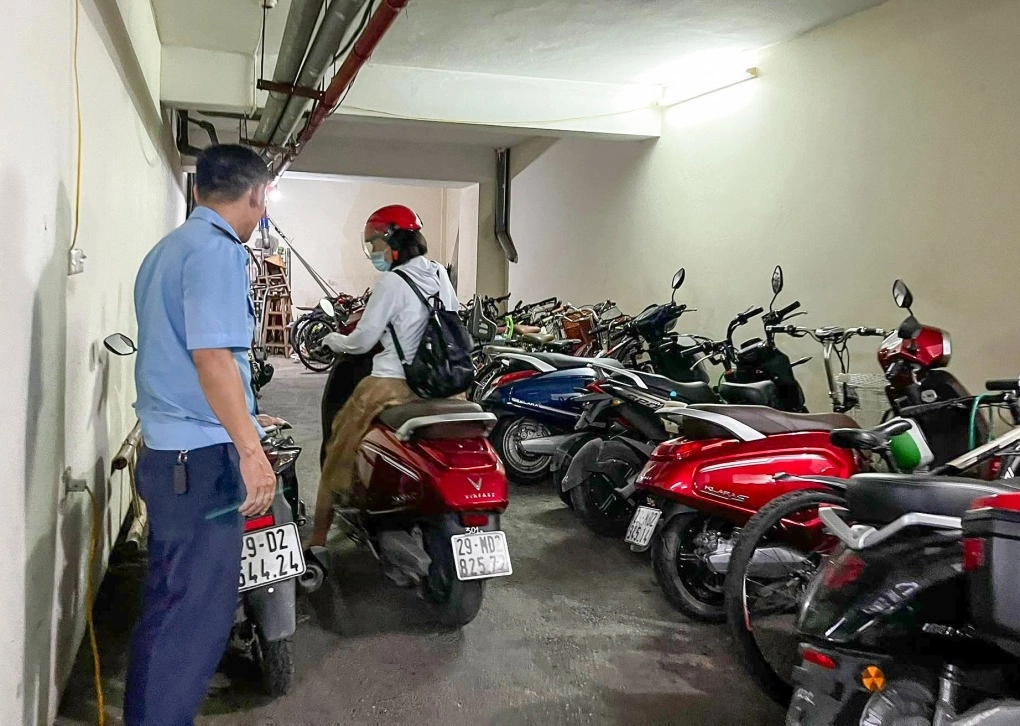
A rising number of apartment buildings in Hanoi have begun banning electric motorbikes and restricting basement charging, triggering debate in a city pushing aggressively toward greener transport. Now, the Hanoi Department of Construction is proposing a set of fixes aimed at balancing safety, infrastructure capacity and the city’s long-term electric mobility goals.
The issue is emerging at a critical moment. Hanoi plans to phase out gasoline motorbikes by schedule in certain districts, yet many residential buildings are refusing to accept electric vehicles — the very technology expected to replace them.
Hanoi’s Solution: Separate Parking Zones and Purpose-Built Charging Areas
During a city level policy forum on December 9, Deputy Director of the Hanoi Department of Construction Đào Việt Long confirmed that several towers have prohibited electric vehicles in basements or banned charging entirely due to fire safety concerns.
His recommended immediate response:
-
Create segregated parking areas for petrol motorbikes, bicycles, and electric motorbikes in all building basements
-
Allocate outdoor or repurposed ground space for electric bike and motorbike parking
-
Install certified charging pillars meeting fire safety requirements
Local ward authorities will work with building management boards to enforce these changes and resolve disputes, which are becoming increasingly common across Hanoi’s fast-growing high-rise market.
Longer term, Hanoi will coordinate with national ministries to issue formal safety standards for basement EV parking and charging, something Vietnam currently lacks.
A Parallel Push: Building a Citywide Public Charging Network
While residential buildings struggle with fire risk concerns, Hanoi is simultaneously preparing a large scale rollout of public charging infrastructure. A draft of the city’s Green Transport Transition Resolution outlines four major policies:
1. Identify Early Locations for Public Charging Stations
Ward level authorities must survey and propose feasible sites. Hanoi will approve a master list to ensure stations match local needs and real-world infrastructure conditions.
2. Retrofit Existing Parking Facilities
All public car parks and road infrastructure within Ring Road 3 must allocate at least fifteen percent of parking slots for clean energy charging by January 1, 2030.
The same rule applies to apartment buildings, commercial complexes, hospitals and other public facilities — provided they meet fire safety codes.
3. Raise the Bar for New Developments
Newly built transport infrastructure and residential or commercial buildings will have to reserve at least thirty percent of their parking spaces for public charging points, positioning Hanoi ahead of its EV adoption curve.
4. Prioritize Large Scale Parking and Transport Hubs
The city will accelerate planned terminal and parking projects at central and gateway districts, creating space for modern, standardized and scalable charging centers.
Crucial Design Choice: Chargers Must Be Universal, Not Proprietary
One of the draft’s most consequential provisions is the requirement that all public charging stations must be brand-agnostic.
Long explains the reasoning:
-
Public chargers sit on state managed land
-
All residents must have equal access
-
Exclusive or proprietary charging systems would fragment the market and hinder EV adoption
Allowing each manufacturer to install its own exclusive stations would lead to higher congestion, wasted public space and slower transition toward green mobility.
A City Balancing Safety, Innovation and Urgency
Hanoi now faces a dilemma playing out across Asia: How can cities accelerate electric mobility while ensuring safety in dense, vertical housing environments?
The immediate measures offer relief for residents who rely on electric bikes as their primary mode of transport. The new infrastructure roadmap, if executed, could make Hanoi one of Southeast Asia’s most EV-ready capitals.
If you’d like, I can also craft a shorter social media version, a punchier headline or an SEO optimized edition.
Related
Discover more from Vietnam Insider
Subscribe to get the latest posts sent to your email.
Source: Vietnam Insider