

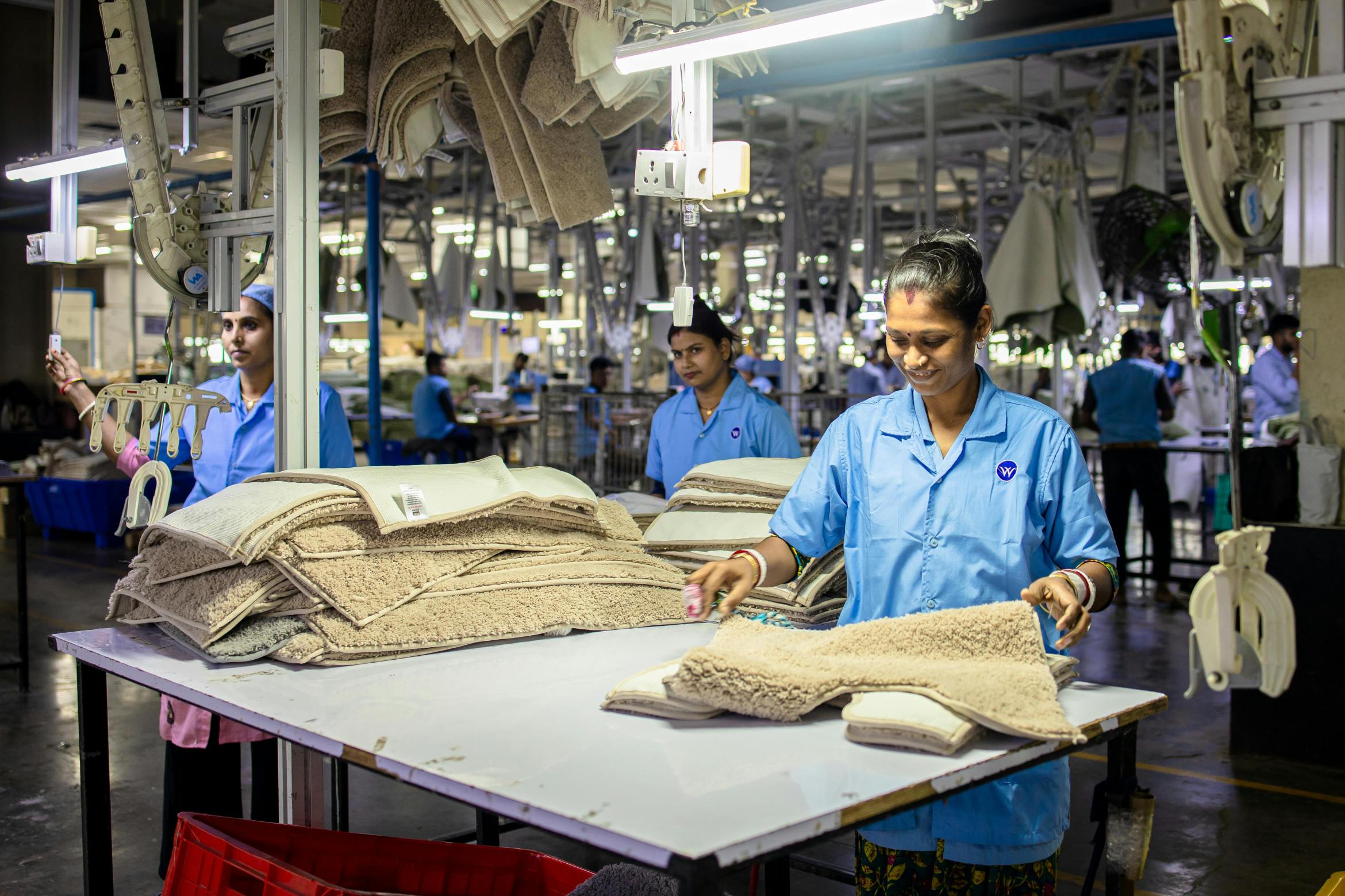
In 2026, global manufacturing continues to evolve faster than ever. As companies look to balance cost efficiency, flexibility, and resilience, outsourcing manufacturing has become a cornerstone strategy for scaling production. This approach allows brands to delegate production to specialized partners across Asia, where the combination of lower costs, skilled labor, and established supplier networks enables faster and more efficient market response.
From electronics assembly and furniture production to metal fabrication and garments, the manufacturing outsourcing trend is reshaping how global supply chains operate. Instead of investing heavily in owned factories, companies are leveraging contract and OEM/ODM manufacturers to ramp up capacity, reduce overhead, and maintain high-quality standards—all without losing control of production visibility.
From Sourcing to Contract Manufacturing: The Next Step in Supply Chain
Many businesses start by sourcing finished goods or components from Asia. However, as operations expand, sourcing alone often becomes insufficient to meet growing demand or quality consistency. This is where outsourcing manufacturing plays a vital role.
Unlike sourcing, which focuses on purchasing, manufacturing outsourcing involves deeper collaboration. It means transferring parts of the production process, design, assembly, or even packaging, to a trusted manufacturer who becomes an operational extension of your business. This model allows companies to:
- Scale quickly without new capital investment.
- Adapt production volume to market changes or seasonal peaks.
- Leverage technical expertise from established Asian factories.
- Optimize costs through labor, logistics, and materials savings.
The transition from sourcing to outsourcing marks a shift from transactional buying to strategic partnership building, a critical step for brands aiming for long-term competitiveness in global trade.
Join Guillaume Rondan (MoveToAsia) and Pietro Karjalainen (FVSource) in a rich discussion revealed on YouTube. They chart the evolution of manufacturing outsourcing in Asia, highlighting real-world factory tours, metal-fabrication lines, furniture-export hubs, and electronics/PCB assembly in Vietnam.
Discover how the China+1 strategy is being put into action, how Vietnamese factories are scaling production with precision, and what “true” outsourcing (not just sourcing) looks like in 2026. Whether you’re seeking to launch your first overseas line or optimize an established supply chain, this video offers actionable insights to move your business forward.
FVSource’s White Paper “Manufacturing in Vietnam in 2026” explores these realities, from factory benchmarking and cost structures to how to implement an efficient outsourced manufacturing strategy in Vietnam in 2026.
The China+1 Strategy and the Rise of Vietnam Outsourced Manufacturing
A Regional Shift Toward Strategic Contract Manufacturing
Across Asia, several manufacturing hubs are emerging as strong alternatives to China. Vietnam, in particular, has distinguished itself as one of the most dynamic examples, combining cost efficiency, a skilled workforce, and rapidly growing industrial capabilities. While Thailand continues to excel in automotive and electronics, and Malaysia in semiconductors, Vietnam’s rise illustrates how the region is collectively redefining manufacturing efficiency through smarter outsourcing strategies.
For decades, China has been the world’s manufacturing powerhouse. Rising labor costs, regulatory complexities, and geopolitical uncertainties, however, have prompted many companies to diversify their production bases. This shift gave rise to the China+1 strategy, in which businesses maintain some operations in China while expanding into other Asian countries to mitigate supply chain risks.
Within this evolving landscape, Vietnam stands out as one of the most promising destinations for outsourcing manufacturing, offering a compelling combination of affordability, expertise, and operational flexibility.
Why Vietnam?
- Competitive costs: Vietnam offers a lower labor cost base compared to China while maintaining strong productivity levels.
- Skilled workforce: Decades of foreign investment have built a capable labor force familiar with global production standards.
- Strong export infrastructure: Ports in Ho Chi Minh City, Hai Phong, and Da Nang connect efficiently with the U.S., Europe, and Asia-Pacific markets.
- Diverse manufacturing sectors: From furniture and garments to electronics and metal structures, Vietnam’s manufacturing industry is rapidly diversifying.
- Government support: Pro-business policies, free trade agreements, and foreign investment incentives continue to attract global manufacturers.
Vietnam outsourcing allows companies to balance cost savings with operational flexibility, making it a strategic alternative, not just a backup, to Chinese manufacturing.
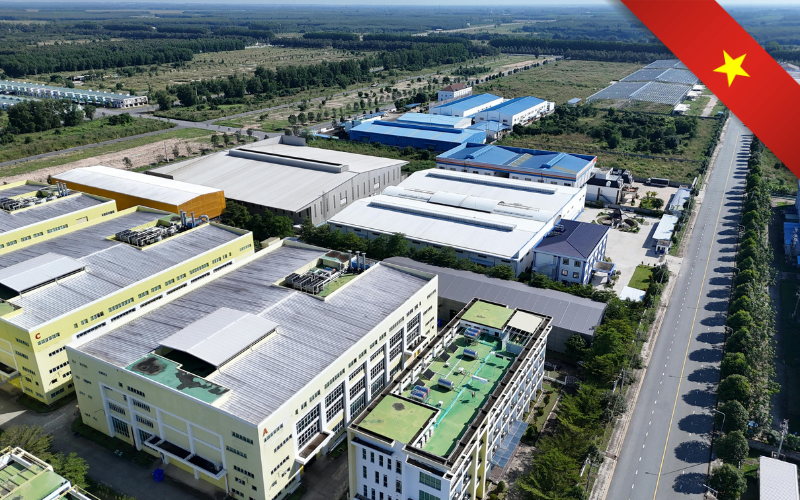
>> Related article: Vietnam as a Key Player in the China Plus One Strategy
Optimizing Cost Structures Through Outsourcing Manufacturing in Asia
One of the main reasons companies turn to manufacturing outsourcing in Asia is cost efficiency. However, true cost structure optimization involves more than just finding the lowest quote; it’s about managing every stage of the value chain strategically.
Here are the key components of cost optimization in outsourcing:
- Production cost efficiency: Partnering with factories that have optimized production lines and high automation levels helps reduce per-unit cost.
- Economies of scale: Contract manufacturers can consolidate orders from multiple clients, lowering raw material and logistics expenses.
- Reduced fixed overhead: Instead of building and maintaining your own factory, outsourcing converts fixed costs (machinery, rent, labor) into variable costs.
- Supply chain agility: Outsourcing partners across Asia can adapt faster to order changes, minimizing waste and overproduction.
- Lead time management: Proximity to ports and efficient production scheduling reduce waiting times and ensure on-time delivery.
Smart outsourcing doesn’t simply shift manufacturing; it redesigns how cost and efficiency interact within your business model.
Building an Efficient and Reliable Asia Supply Chain
Outsourcing manufacturing requires more than signing a production contract; it involves building a resilient Asia supply chain. The most successful companies approach this process strategically:
- Factory selection: Conduct audits to verify technical capacity, certifications, and compliance with international standards.
- On-site presence: Having a local team or working with an agency like MoveToAsia or FVSource ensures real-time communication and production control.
- Multi-tier partnerships: Work with both primary manufacturers and subcontractors to manage production flexibility.
- Quality assurance: Implement third-party quality control to monitor output, perform inspections, and ensure consistency across batches.
- Transparent logistics: Understand all shipping, customs, and hidden logistics costs to avoid surprises that erode margins.
Asia’s supply chain network is vast, but navigating it effectively requires expertise and local experience. Companies that invest in partnerships, not just transactions, are the ones that scale sustainably.
>> Related articles: TOP Products & Vietnam’s Sourcing Market in 2026: A Strategic Perspective
Vietnam’s Role in the Future of Global Manufacturing in Asia
Vietnam’s rise in the outsourcing landscape is not a temporary trend, it represents a long-term structural shift in Asia. As production costs in traditional hubs continue to increase, and as Western companies prioritize supply chain resilience, Vietnam outsourcing will remain at the heart of regional manufacturing strategies.
Industries leading the growth include:
- Electronics and PCB assembly: Vietnam’s electronics export value in 2024 (~US$134.5 billion) is well above Thailand (~US$51 billion) and reaching into Malaysia’s range (~US$121 billion). This shows Vietnam has achieved a significant scale in the manufacturing/export of electronics.
- Furniture and home décor: Key markets such as the U.S., EU, and Japan dominate demand, and Vietnam is ranked second in the U.S. market after China.
- Garments and workwear: Earlier, for January–May 2024, Vietnam had already surpassed China in the export market‑share of textiles & garments to the U.S. market. Vietnam is no longer simply a secondary supplier; it is becoming a leader in apparel exports to major markets such as the U.S.
- Metal fabrication and steel structures: Vietnam is not only a location for low‑cost labour‑intensive sectors, but is building capacity in higher‑value industrial & construction‑material sectors, making it increasingly relevant for sectors like steel structures, metal fabrication, and turnkey manufacturing for industrial clients.
The government’s continued investment in industrial zones, logistics, and renewable energy further strengthens Vietnam’s appeal as a reliable outsourcing destination.
Looking Ahead: Asia Outsourced Manufacturing in 2026 and Beyond
By 2026, outsourcing manufacturing in Asia will become even more data-driven, transparent, and sustainability-focused. Companies will increasingly rely on digital tools for supplier monitoring, quality tracking, and logistics management.
At the same time, global brands will move from single-country dependence to multi-country production ecosystems, leveraging the unique advantages of Vietnam, Thailand, Malaysia, and India.
FVSource’s White Paper “Manufacturing in Vietnam in 2026” offers field-based analysis and practical frameworks for large SME and MNC seeking for outsourced manufacturing capabilities.
For companies considering outsourcing or expanding their supply chains, the key is to focus on partnerships, flexibility, and quality assurance—not just short-term cost savings. Whether you’re a startup scaling your first production line or a multinational optimizing capacity, understanding how to implement outsourcing strategically will define your competitiveness in the coming decade.
Conclusion
Outsourcing manufacturing in Asia is no longer just a cost-cutting measure, it’s a pathway to global competitiveness. By combining Vietnam outsourcing opportunities with smart cost structure optimization and resilient Asia supply chain strategies, companies can scale efficiently and sustainably in 2026 and beyond.
As the global economy evolves, those who master outsourcing will not only survive supply chain disruptions—they’ll lead the next generation of global manufacturing.
Related
Discover more from Vietnam Insider
Subscribe to get the latest posts sent to your email.
Source: Vietnam Insider