

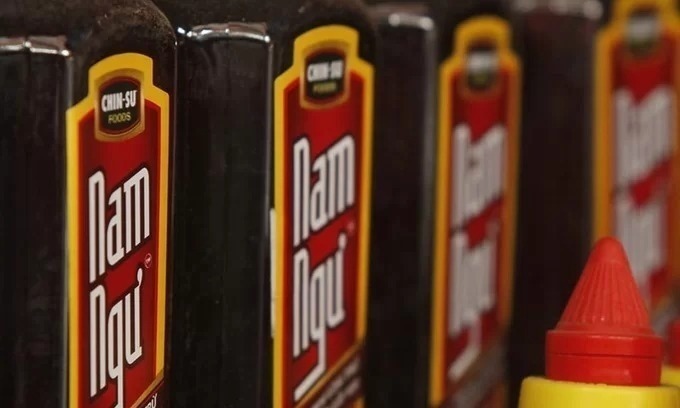
The move to Vietnam’s main HoSE exchange follows a massive—and painful—supply chain transformation, positioning the FMCG giant for its next growth phase.
HANOI — Masan Consumer (UPCoM: MCH), the $6 billion company behind Vietnam’s most iconic kitchen staples like Chin-su chili sauce and Omachi instant noodles, has confirmed plans to upgrade its stock listing in a move aimed squarely at Vietnam’s blue-chip elite.
The company will move from the junior UPCoM market to the main Ho Chi Minh Stock Exchange (HoSE), a move executives say will pave the way for its inclusion in the prestigious VN30 Index, Vietnam’s equivalent of the S&P 500.
The listing, slated for late 2025 or the first half of 2026, is designed to “unlock value” by attracting a new wave of international and institutional investors. Moving to HoSE significantly enhances corporate transparency, boosts stock liquidity, and could trigger a major re-valuation of one of Southeast Asia’s largest consumer packaged goods (FMCG) companies.
This strategic move is not just a technical upgrade. It comes just as Masan emerges from a deliberate, company-wide restructuring of its vast, traditional distribution network.
Recent financial reports showed a short-term hit to revenue (down 3.1% in 9 months) and profit (down 16.1%). However, executives explain this was an intentional consequence of its “Retail Supreme” project—a strategic pivot to bypass traditional wholesalers and build a direct-to-retail (DTR) relationship with hundreds of thousands of “mom-and-pop” shops across the country.
Tearing Up the Traditional Playbook
The HoSE listing was deliberately timed to follow this complex operational overhaul.
“We wanted Masan Consumer to get through the supply chain volatility and achieve a solid footing… to maximize value for investors,” said Danny Le, CEO of parent company Masan Group (HoSE: MSN), in a previous investor meeting.
That footing now appears secure. The “Retail Supreme” project was a massive undertaking to modernize a distribution system that had long relied on a network of independent wholesalers. The new model involved:
- Re-training staff as “sales representatives” for specific territories.
- Deploying new management software with AI-powered order suggestions.
- Enabling direct digital connections between sales reps and retail points.
The results are already clear: Masan’s direct retail coverage has surged by 40% to 345,000 storefronts. Crucially, the company has cut its reliance on lower-margin wholesalers from 60% of its sales down to just 30%.
The Rebound: Why the Dip Was ‘Temporary’
While the transition forced a temporary sales dip as distributors cleared old inventory, Masan’s leadership is confident the worst is over.
“This decline is temporary,” said Masan Consumer CFO Huynh Viet Thang, explaining the company was optimizing inventory levels across its new system.
He noted that the new model is already proving its efficiency. In areas that transitioned early, it took 6-9 months for sales to recover. In the most recent phases, that recovery time has been cut in half to just 3 months.
This rapid optimization is the basis for the company’s forecast of a strong return to growth in the fourth quarter of 2025.
The Path to the VN30
Masan Consumer’s stock (MCH) has traded on the UPCoM, a market for unlisted public companies, since 2017. A successful move to HoSE would instantly make it one of the exchange’s most valuable listings.
“Masan Consumer’s capitalization post-listing will likely be very high and qualify for the VN30 basket,” said Masan Group Deputy CEO Michael Hung Nguyen.
For investors, this is the key event. Inclusion in the VN30 would automatically trigger buying from domestic and international index-tracking funds, creating new demand for the stock and cementing its status as a core holding for anyone looking to invest in Vietnam’s dynamic consumer story.
Related
Discover more from Vietnam Insider
Subscribe to get the latest posts sent to your email.
Source: Vietnam Insider