

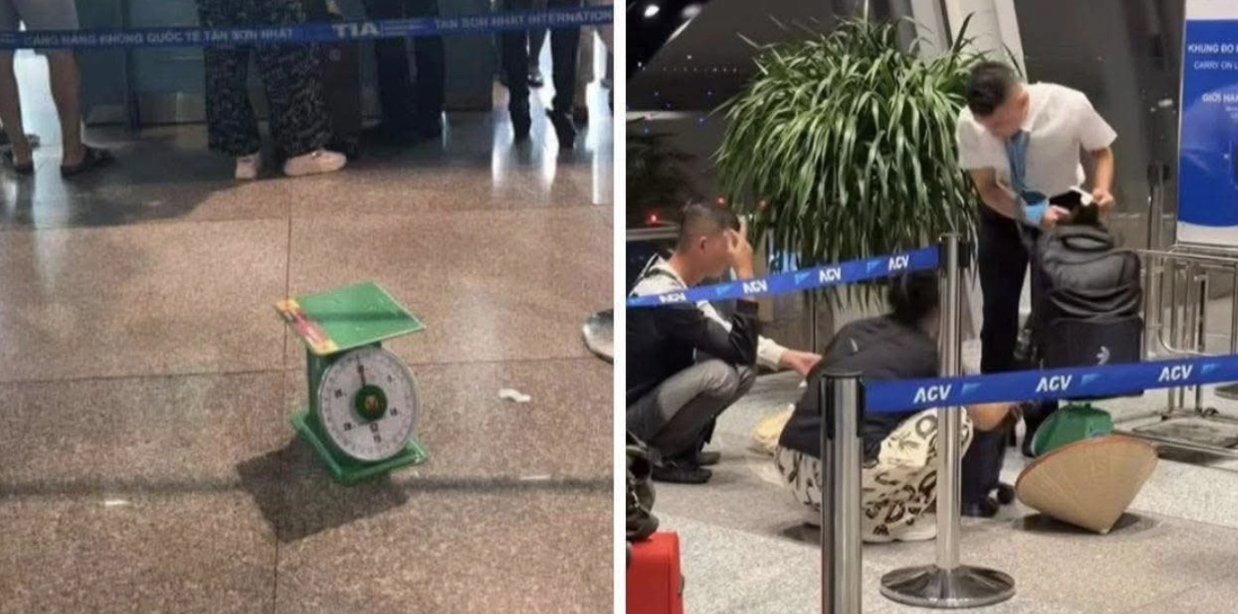
Vietnam Airlines’ decision to weigh passengers’ carry-on luggage and charge extra fees for overweight items starting November 3 has sparked widespread debate among travelers.
According to the national flag carrier, the new policy aims to ensure safety, punctuality, and service quality. Passengers are encouraged to comply with existing cabin baggage limits to avoid additional charges.
Under the new rules, if a passenger’s carry-on exceeds the standard allowance, Vietnam Airlines will collect a fee equivalent to one piece of checked baggage. Overweight luggage up to 10 kg beyond the limit, or one extra piece (up to 10 kg), will incur the same charge as checked baggage purchased at the airport.
For bags that exceed both weight and size limits, the fee will be equivalent to that of oversized checked luggage.
Example: On domestic routes such as Ho Chi Minh City – Hanoi, one 23-kg checked bag costs approximately VND 600,000. Overweight carry-ons will now be charged the same rate at the boarding gate.
Payment can be made by credit card, debit card, or cash, depending on airport facilities.
Public reaction: divided opinions
The move has caught many passengers by surprise. Some have called it “inconvenient” and “inconsistent with the airline’s premium brand image,” while others support the policy as a necessary step to maintain flight safety and fairness.
“Airlines in Australia also weigh carry-on luggage, but the process looks more professional,” said Hồng Hạnh, a traveler from Hanoi. “They use sleek digital scales placed discreetly at check-in counters. Vietnam Airlines could adopt a similar approach and communicate the rules more clearly.”
Before Vietnam Airlines, low-cost carrier Vietjet Air had already implemented carry-on checks and gate fees. However, passengers say the experience feels different when applied by a full-service airline.
Why airlines are cracking down
Industry experts note that overhead bins have strict weight limits. Excess carry-on weight increases risks during turbulence and landing, and can delay boarding.
Vietnam Airlines said the policy aligns with international safety standards and aims to improve on-time performance.
Still, the change highlights the challenge airlines face in balancing operational efficiency with customer satisfaction — especially as Vietnam’s aviation market continues to expand rapidly.
Related
Discover more from Vietnam Insider
Subscribe to get the latest posts sent to your email.
Source: Vietnam Insider