

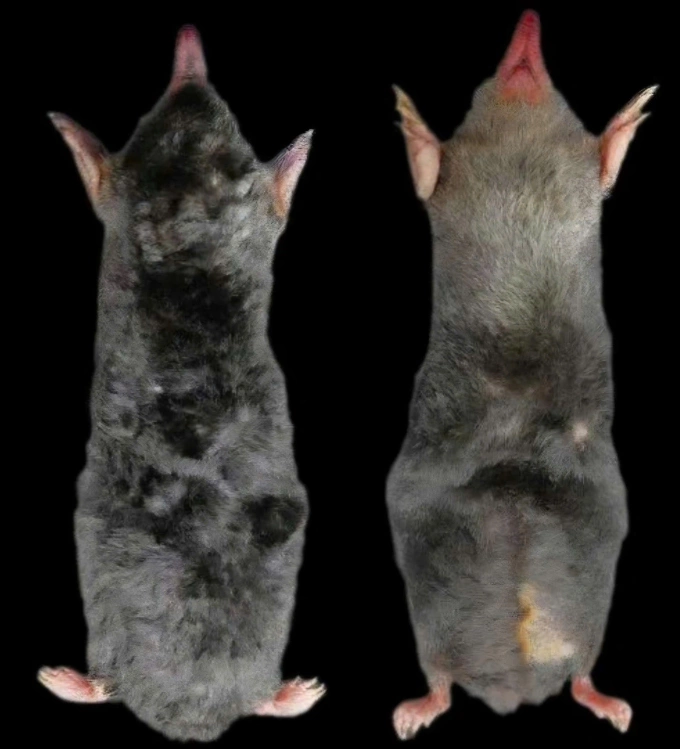
The discovery of the ‘Darwin’s Mole’ (Euroscaptor darwini) highlights the globally critical biodiversity of Vietnam’s Northwest region, a major draw for eco-tourism and conservation investment.
HANOI – In a significant boost to Vietnam’s global reputation as a biodiversity hotspot, scientists have announced the discovery of a completely new species of mammal found in the remote forests of the Pù Luông Nature Reserve.
The newly identified creature, a mole belonging to a lineage distinct from all others previously recorded worldwide, has been named Euroscaptor darwini, or Darwin’s Mole, in honor of the renowned naturalist Charles Darwin.
The discovery confirms the extraordinary, untapped ecological value of Vietnam’s dense, ancient forests—a major point of interest for both foreign investment in conservation and the burgeoning eco-tourism sector.
A New Species with Extreme Adaptation
The findings are the result of a multi-year collaboration between the Institute of Biology, Vietnam National University, Hồng Đức University, and the Pù Luông Nature Reserve Management Board.
The research team, led by Dr. Đậu Quang Vinh, identified a population in the southwestern high-altitude forests (900–1,100m) of the Pù Luông mountain range. “After years of surveying, we confirmed a group of individuals whose anatomical and genetic characteristics are completely unique compared to known mole species in Vietnam, Laos, and China,” said Dr. Vinh.
The most distinctive feature of the new species is its extremely short tail and unique tailbone structure—a key identifier among moles.
Key Detail: The Darwin’s Mole’s tail protrudes only about 2mm from the skin and contains just 6–7 vertebrae, significantly fewer than its closest relatives. This extreme morphological adaptation suggests a highly evolved life underground, where the tail has lost most of its sensory function.
Morphological, anatomical, and molecular (DNA) analyses confirmed that this is an independent species, never before described globally.
Pù Luông: A Critical Biodiversity Hotspot
The discovery underscores the immense conservation value of the Pù Luông Nature Reserve, which sits in Thanh Hóa province and covers nearly 17,000 hectares. As the core area of the Northwest Biosphere Reserve, the region is renowned for its evergreen forests, limestone mountains, and rich gene pool of flora and fauna.
Considered by scientists a “biodiversity hotspot”—a region with a high concentration of endemic life under threat—Pù Luông currently records 908 animal species and 1,597 plant species.
“The discovery of an entirely new animal species right here in Vietnam is a source of great pride for domestic science and a testament to the essential conservation value of the Pù Luông forest ecosystem,” said Lê Đình Phương, Director of the Pù Luông Nature Reserve.
Researchers are now working to map the mole’s distribution and ecological habits to propose its conservation status for both Vietnam’s Red Book and the IUCN Red List, which will guide specialized protection plans for the area.
Related
Discover more from Vietnam Insider
Subscribe to get the latest posts sent to your email.
Source: Vietnam Insider