

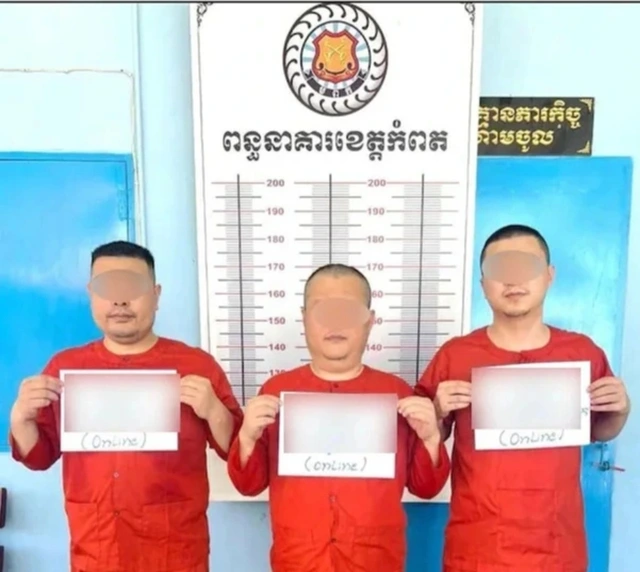
A recent case involving the kidnapping and torture of a South Korean student in Cambodia has sparked widespread fear among South Korean travelers, prompting Seoul to issue a travel ban on several areas in the country.
On October 15, the South Korean government announced travel restrictions to Bokor Mountain (Kampot Province), Bavet, and Poipet, citing rising concerns over scams and abductions targeting Korean nationals.
“Korean citizens visiting or staying in these areas may face penalties under the Passport Act and related regulations. Those with travel plans are advised to cancel their trips,” Cambodia’s Ministry of Foreign Affairs said, according to CNA.
Growing Anxiety Among Korean Travelers
Seo, a 34-year-old from Seoul’s Mok-dong district, had planned a five-day trip to Cambodia in November to visit Angkor Wat. But after reading continuous reports about Korean nationals being kidnapped or killed, she decided to cancel.
“I asked if I could get a refund, but the answer was no,” Seo told Chosun Ilbo. “If people from our country are repeatedly kidnapped there, shouldn’t the government classify Cambodia as a restricted destination so travelers can cancel for safety reasons?”
The fear intensified after reports that Park Min-ho (22), a university student from Yecheon, North Gyeongsang Province, was detained and tortured to death near a suspected criminal compound in Cambodia earlier this year.
According to lawmaker Na Kyung-won, the number of reported kidnappings of Korean citizens in Cambodia rose dramatically—from 10–20 cases annually in 2022–2023 to 220 in 2024, and 330 cases as of August 2025. Reports of job scams and forced detentions increased almost fifteenfold year-over-year.
On Korean travel forums, the term “Fear of Cambodia” (캄보디아 공포증) is trending, with users warning others:
“Cambodia is terrifying. Are other countries safe?”
“Tips to avoid getting kidnapped.”
“Never travel to Cambodia.”
Cambodian Tourism Sector Pushes Back
In response, Cambodian tourism officials criticized what they called misrepresentation of the situation, urging Seoul to distinguish between criminal fraud networks and legitimate tourism.
“Most victims came seeking illegal jobs, not as regular tourists,” said Seam Sokkheng, head of the Korean Tour Guide Association in Cambodia, in an interview with The Phnom Penh Post. “It’s unfortunate that the Korean government has not differentiated between organized crime and tourism.”
Sokkheng added that his recent Korean tour group felt “completely safe” during their visit. “We regret the misunderstanding,” he said, calling on Seoul to improve public education on online scams and fake job offers that lure people into danger.
Tensions Rise as Seoul Sends Task Force
Amid growing alarm, South Korea elevated its travel advisory for Phnom Penh to Level 2.5 — Special Travel Warning, and dispatched a task force to Cambodia to address concerns about fake employment rings and scam compounds.
Seoul estimates that about 1,000 South Koreans may currently be involved in online scam operations in Cambodia. Cambodian authorities say they are intensifying crackdowns on cybercrime networks, which reportedly employ around 200,000 workers from multiple countries targeting victims worldwide.
“It’s believed that hundreds of thousands are part of Cambodia’s scam industry, affecting victims across Asia, including Korea,” said National Security Advisor Wi Sung-lac.
Related
Discover more from Vietnam Insider
Subscribe to get the latest posts sent to your email.
Source: Vietnam Insider