

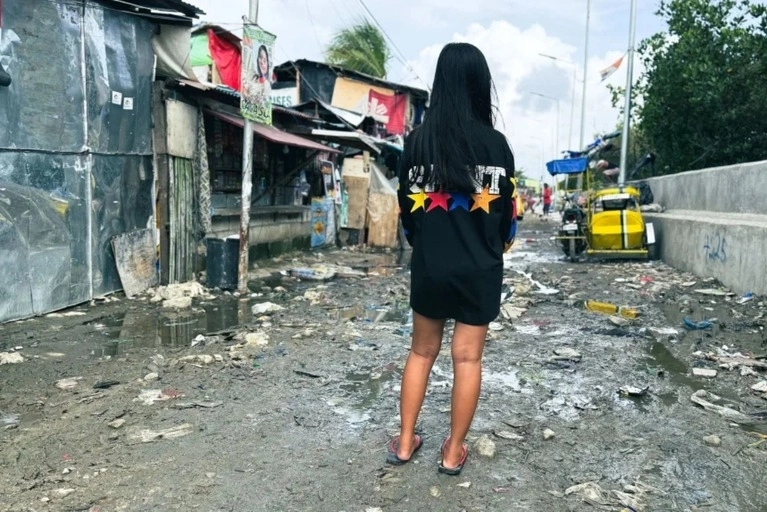
At six months pregnant, Clara, 14, has never seen a doctor and knows little about the health of her unborn baby.
She lives in Baseco, a crowded district in the heart of Manila facing Manila Bay, home to more than 64,000 people. Houses here are built from scraps of concrete, wood, and rusted tin sheets, vulnerable to flooding and disease. Clara, who hopes to give birth to a baby boy, says her school never offered sex education.
“If I had learned more about reproductive health,” she says softly, “maybe I wouldn’t be pregnant at such a young age.”
Clara’s story is far from unique. It lies at the center of a national debate in the deeply Catholic Philippines, where religion shapes every aspect of life. The issue of whether schools should provide sex education has divided lawmakers, health experts, and church leaders — even as the number of girls aged 10 to 14 becoming pregnant continues to rise at an alarming rate.
The Philippines now has one of the highest rates of teenage pregnancy in Asia. According to the Commission on Population and Development, while pregnancies among 15–19-year-olds have slightly declined, cases among girls aged 14 and younger have surged by 38% in just four years — from about 2,400 in 2019 to over 3,300 in 2023.
Authorities have long called it a “national social emergency.” Yet more than a decade of legislative debate has produced little progress. The Prevention of Adolescent Pregnancy Bill, first introduced in 2010, remains stalled amid strong opposition from conservative religious groups. The latest version — which seeks to mandate Comprehensive Sexuality Education (CSE) and ease access to contraceptives — still faces an uncertain future.
Under current law, minors under 18 must have parental consent to purchase or use contraceptives — a restriction many experts describe as one of the biggest barriers.
“Whether we like it or not, the data clearly show that adolescents are sexually active,” said Senator Risa Hontiveros, the bill’s principal author. “This law is essential to help them protect themselves.”
But such views clash with the country’s moral foundations. In the Philippines, where 80% of the population is Catholic, sex outside marriage remains taboo, and abortion is illegal in all cases, including rape or incest.
The consequences of this cultural and political deadlock fall hardest on children.
“Most teenagers I meet have almost no understanding of reproductive health,” said Dr. Irene Marie Rubio of Manila’s Jose Fabella Memorial Hospital. “Some don’t even know that sex can lead to pregnancy.”
One of them is Jude, 15, who dropped out of school at eight months pregnant and moved in with her 21-year-old boyfriend.
“He was the first person to teach me about sex,” she said.
A USAID-funded study found that, on average, there is a seven-year age gap between young mothers and their partners in the Philippines — often reflecting power imbalances and lack of consent.
“Girls under 16 are three times more likely to die from pregnancy-related complications than adult women,” warned Dr. Junice Melgar, executive director of the NGO Likhaan. “Their bodies aren’t ready — and psychologically, neither are they. Stigma makes them afraid to seek help.”
While lawmakers argue, groups like Likhaan are stepping in. Volunteers visit poor communities to teach teenagers about sex and consent, train parents to talk to their children, and distribute condoms to young men.
For Clara, those efforts have come too late. She is due in three months, hoping to give birth at a hospital — with only her mother by her side. Her dream of returning to school still lingers but fades under the weight of motherhood.
“I just hope one day I can finish high school,” Clara said quietly. “And that my child will have a better chance than I did. That’s my only wish.”
Related
Discover more from Vietnam Insider
Subscribe to get the latest posts sent to your email.
Source: Vietnam Insider