

Vietnam Insider — A new study by Yale University warns that President Donald Trump’s import tariff policies could drive nearly one million additional Americans into poverty by 2026.
On September 9, The Budget Lab, a research center at Yale, released a report estimating that Trump’s tariff plan would increase the U.S. poverty population by about 875,000 people within two years, including approximately 375,000 children.
The findings are based on the Official Poverty Measure (OPM) — the long-standing benchmark of the U.S. Census Bureau, which evaluates poverty using pre-tax income. According to researchers, the impact of higher import taxes and consumer prices will fall disproportionately on low-income households, as they spend a larger share of their earnings on essential goods. This makes them more vulnerable to price shocks.
Economists also note that poorer households tend to purchase more imported goods — the very products most affected by tariffs. Official U.S. data released on September 9 showed nearly 36 million Americans were living in poverty by the end of last year.
“Import tariffs are essentially taxes on American families because they target goods and services, not income,” explained John Ricco, Policy Research Director at The Budget Lab. The center projects that the U.S. poverty rate could rise from 10.4% to 10.7% as a result of tariff policies.
Responding to the report, White House spokesperson Taylor Rogers told CNN that Trump’s first-term economic agenda “helped families grow wealthier while reducing income inequality.” He argued that in a second term, a combination of domestic tax cuts, import tariffs, and increased investment would “end the economic disaster caused under Joe Biden.”
Rogers also pointed to fresh government data showing that U.S. inflation is cooling, claiming tariffs have not raised prices “as so-called experts predicted.” The Producer Price Index (PPI) unexpectedly fell 0.1% in August. However, Barclays economists cautioned that the headline PPI data “masked underlying strength” and warned that “inflation remains persistent.”
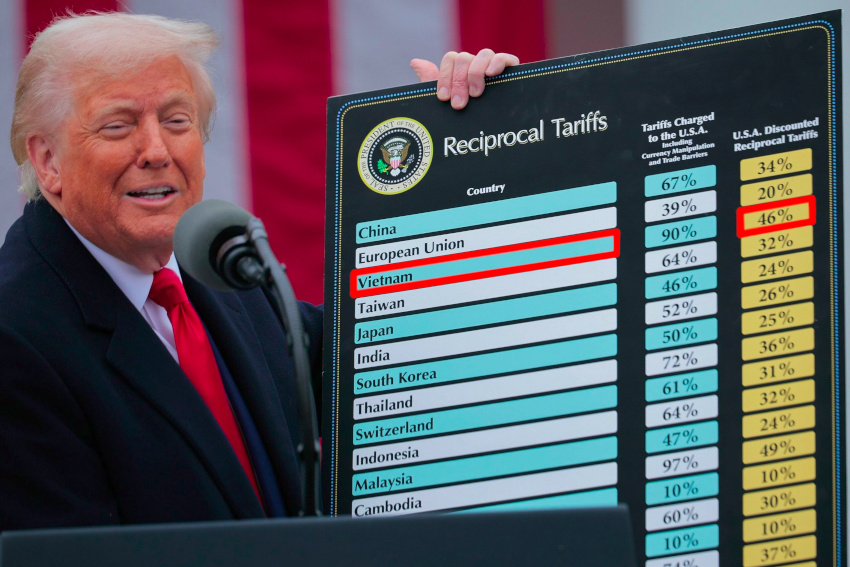
On average, U.S. tariffs on imported products now stand at 17.4% — the highest level since 1935, according to The Budget Lab.
Trump’s tariff policies also face legal headwinds. After unfavorable rulings from the U.S. Court of International Trade in Manhattan and the federal appeals court in Washington, the government has appealed to the Supreme Court. On September 9, the Court agreed to hear the case.
If the tariffs are ultimately deemed unlawful, roughly 70% of Trump’s announced trade measures this year could be struck down. Still, analysts and even Trump administration officials suggest the president will look for alternative ways to preserve them.
Related
Discover more from Vietnam Insider
Subscribe to get the latest posts sent to your email.
Source: Vietnam Insider