

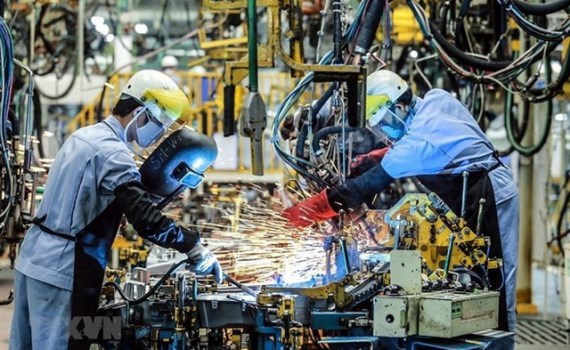
Vietnam attracted nearly USD 24.1 billion in registered foreign direct investment (FDI) during the first seven months of this year, with USD 13.6 billion in disbursed capital — up 8.4% year-on-year and the highest level for this period in the past five years, according to data from the General Statistics Office under the Ministry of Finance.
Singapore Leads, Malaysia and Sweden Make Strong Gains
Singapore remained Vietnam’s top foreign investor among 74 countries and territories, with USD 2.84 billion in registered capital, accounting for 28.3% of the total. Notably, Malaysia and Sweden recorded exceptional growth. Malaysia’s surge came from an additional USD 1.12 billion in capital for the Yen So Park project in Hanoi, while Sweden invested USD 1 billion in a new polyester recycling and textile waste-to-pellet processing complex in Binh Dinh Province.
Investor Confidence Defies Global Slowdown
Nguyen Van Toan, Vice Chairman of the Vietnam Association of Foreign Invested Enterprises, noted that while global trade headwinds typically dampen FDI flows, Vietnam stands out as a rare bright spot. International investors are encouraged by reforms such as plans to upgrade Vietnam’s stock market classification, administrative streamlining, and support for private-sector growth.
“FDI inflows are not just short-term capital shifts — they reflect long-term confidence in Vietnam’s sustainable development potential,” Toan said. The European Chamber of Commerce in Vietnam (EuroCham) reported in its Q2 Business Confidence Index that nearly three-quarters of European businesses would recommend Vietnam as an investment destination.
EuroCham Chairman Bruno Jaspaert affirmed that European enterprises remain optimistic, bolstered by next-generation free trade agreements, particularly the EU-Vietnam Free Trade Agreement (EVFTA). August 1 marked five years since the EVFTA took effect, generating nearly USD 300 billion in bilateral trade and enhancing Vietnam’s appeal to European investors.
A Competitive Strategy Amid Shifting Supply Chains
The Ministry of Finance highlighted that global supply chain realignment and U.S.-China strategic competition have positioned Vietnam as a rising manufacturing hub in Asia. The renewable energy sector, where Vietnam ranks second among the world’s top 10 developing economies for the 2015–2022 period, has attracted over USD 106.8 billion in FDI.
Strategic partnerships with the U.S., EU, Australia, Singapore, and others, alongside the development of eco-industrial and low-carbon zones, are reinforcing investor trust.
Challenges and the Path Ahead
Despite the achievements, Vietnam still faces challenges in maximizing FDI benefits. The Ministry of Finance pointed to cumbersome administrative procedures, limited technology transfer, uneven workforce quality, and a lack of large-scale, industry-leading projects. Supporting industries remain underdeveloped, industrial infrastructure is uneven, and high-quality land supply is concentrated in major cities.
To address these gaps, Vietnam is shifting its FDI strategy from offering pure incentives to enhancing the overall investment climate. Plans include upgrading industrial park and economic zone infrastructure, ensuring stable power supply, expanding clean land availability, and developing a highly skilled workforce.
Sophie Dao, Senior Partner & Lawyer at GBS – Global Business Services, commented: “Vietnam’s ability to attract record-high FDI in the current global climate speaks volumes about its economic resilience and strategic positioning. The combination of trade liberalization, infrastructure investment, and a commitment to administrative reform sends a strong signal to the global business community. At GBS, we see growing interest from clients across multiple sectors — from manufacturing and renewable energy to high-tech and logistics — who view Vietnam not just as a low-cost production base, but as a long-term growth partner in Asia.”
Related
Discover more from Vietnam Insider
Subscribe to get the latest posts sent to your email.
Source: Vietnam Insider