

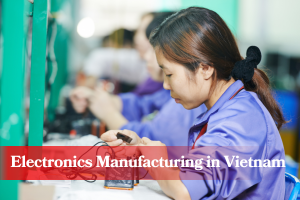
As global supply chains continue to diversify beyond China, EMS manufacturing in Vietnam is emerging as a strategic alternative for international electronics brands seeking scalability, cost-efficiency, and resilience. From turnkey PCB assembly to box-build integration, Vietnam is rapidly climbing the value chain in high-tech manufacturing — backed by strong foreign direct investment (FDI), competitive labor costs, and a growing ecosystem of local component suppliers.
Vietnam’s Emerging Role in EMS Manufacturing
Over the past decade, Vietnam has quietly but steadily transformed its industrial base. Initially known for textile, garment, and basic assembly operations, the country is now attracting attention for its sophisticated Electronics Manufacturing Services (EMS) sector. This shift reflects Vietnam’s growing capability to support not only labor-intensive production, but also technically complex products and value-added services.
Major manufacturing zones such as Ho Chi Minh City, Bac Ninh, and Da Nang now host modern EMS factories that serve a wide range of global clients. These facilities are capable of supporting full product life cycles — from design for manufacturability (DFM) and prototype development, to high-volume PCB assembly and final product integration.
The Vietnamese government has played an active role by developing high-tech industrial parks and offering incentives for semiconductor-related investment. Recent policy roadmaps aim to boost R&D capacity, develop skilled engineering talent, and integrate local firms into global value chains.
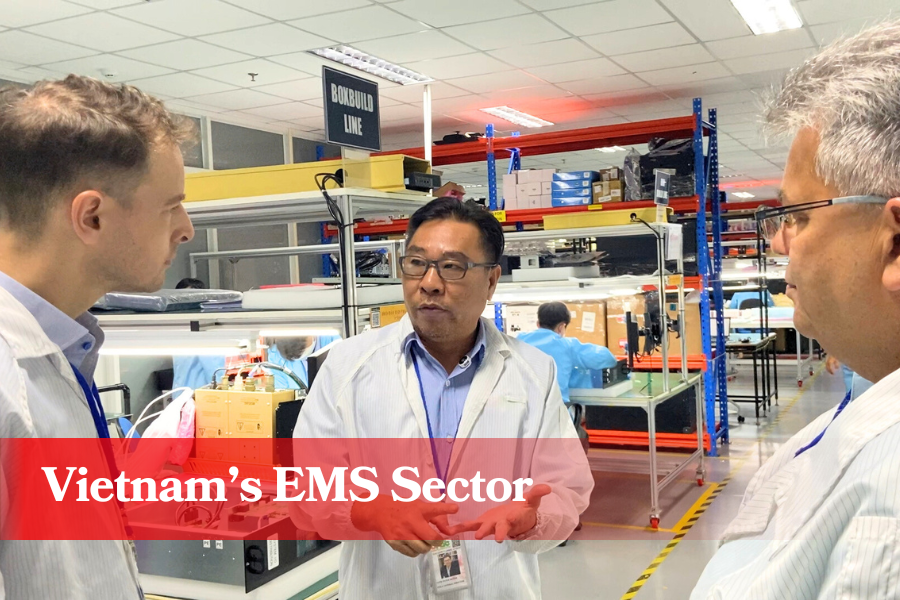
For a real-world look inside one of Vietnam’s most advanced electronics factories, watch our exclusive factory tour video below. You’ll explore how turnkey PCB assembly lines operate — from high-speed SMT machines to full box-build systems — and hear insights from the factory director on Vietnam’s evolving role in EMS manufacturing.
Turnkey PCB Assembly Services Gain Traction in Vietnam
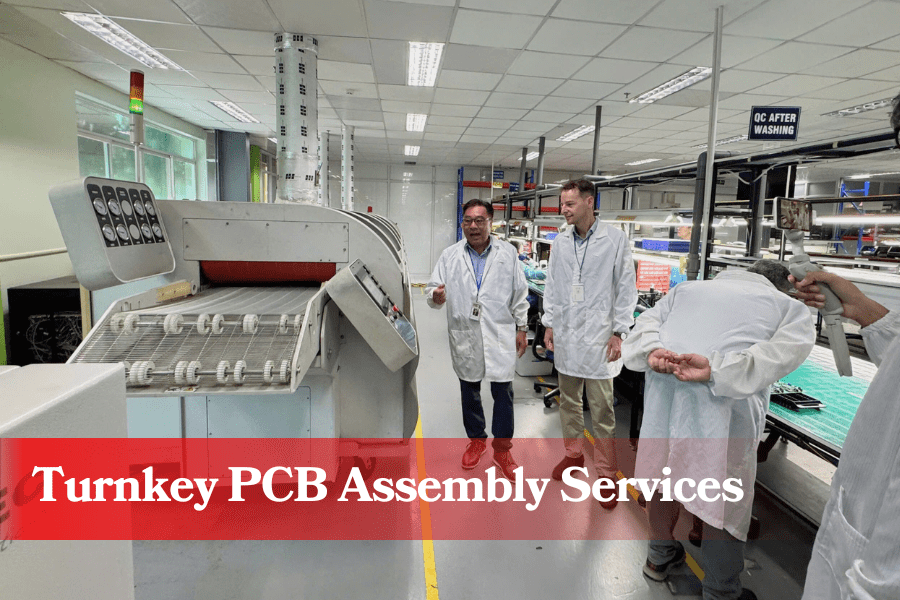
A standout feature of Vietnam’s EMS landscape is the increasing adoption of turnkey PCB assembly services. Under this model, EMS providers take full responsibility for the production process — sourcing all components, manufacturing the printed circuit boards (PCBs), and completing the final assembly and functional testing.
This model provides OEMs and startups alike with several key advantages:
- Streamlined procurement and logistics, reducing the complexity of managing multiple suppliers
- Faster time to market, especially for New Product Introduction (NPI) and iterative prototyping
- Greater quality control, thanks to centralized production and traceable component sourcing
- Cost savings through economies of scale and local vendor partnerships
>> Related article: Vietnam’s Electronics Rise in EMS and SMT: Could It Be the Next Best Option For China Plus One?
Factories offering turnkey PCBA services in Vietnam are increasingly automated, with SMT lines capable of placing 0201-size components, AOI (Automated Optical Inspection), X-ray inspection, and in-circuit testing (ICT). In many facilities, MES (Manufacturing Execution Systems) are used to track process parameters in real time, enhancing transparency and compliance for international customers.
FDI Growth and Supply Chain Diversification Fuel Vietnam’s EMS Sector
Vietnam’s emergence in the EMS sector coincides with a broader strategic shift in global manufacturing. Rising costs in China, geopolitical uncertainty, and a renewed focus on supply chain resilience have prompted multinational companies to adopt a “China Plus One” strategy — and Vietnam is at the top of the list.
Foreign direct investment (FDI) in Vietnam’s electronics manufacturing sector has surged, with industry giants such as Foxconn, Pegatron, Jabil, and Amkor establishing or expanding operations. These investments not only bring advanced production capacity, but also contribute to skill development and technology transfer across the Vietnamese supply chain.
Mid-sized OEMs and contract manufacturers from Europe and North America are also setting up sourcing offices or collaborating with local EMS partners for flexible, scalable production. Turnkey PCBA in Vietnam allows them to avoid upfront capital expenditures while maintaining control over quality and IP protection.
Importantly, local sourcing capabilities have grown significantly. Many EMS companies can now procure up to 60–70% of standard components locally or from neighboring countries such as Thailand and Malaysia. This contributes to shorter lead times and reduced exposure to global supply shocks.
Key Sectors Benefiting from EMS and PCBA Manufacturing in Vietnam
 >> Related article: Vietnam’s FDI Landscape: Its Transformation from Labor-Intensive to High-Tech Growth
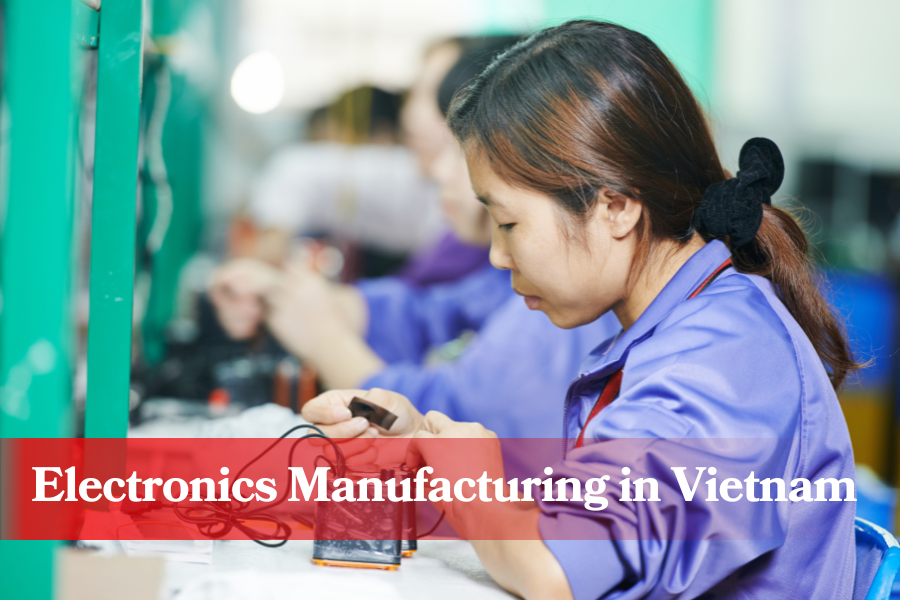
Vietnam’s EMS factories serve a broad range of industries, with demand growing most rapidly in the following sectors:
- Telecommunications and IoT: Vietnam supports the assembly of routers, smart meters, gateway devices, and 5G infrastructure equipment.
- Medical Devices: With strict regulatory requirements, Vietnam’s EMS providers are increasingly capable of producing low-volume, high-complexity boards with full traceability and testing.
- Automotive Electronics: As EV production expands across Asia, PCB assemblies for battery management systems, infotainment units, and ECUs are in high demand.
- Consumer Electronics: Vietnam’s stable infrastructure, low-cost labor, and improving logistics make it ideal for manufacturing smart wearables, headphones, and connected home devices.
Vietnamese EMS firms are also moving upstream — offering design support, software integration, and supply chain management services that traditionally fell outside their scope.
Future Outlook for EMS and Electronics Manufacturing in Vietnam
>> Related aritcle: Vietnam’s Electronics Rise in EMS and SMT: Could It Be the Next Best Option For China Plus One?
With the global EMS market expected to surpass USD 800 billion by 2030, Vietnam is positioned to capture a meaningful share. The country’s advantage lies not only in cost but in its flexibility, political stability, growing talent pool, and improving local supplier network.
Challenges remain — including infrastructure gaps in inland regions, limited availability of certain high-end ICs, and the need for deeper R&D investment. However, with public-private partnerships and increased collaboration between global OEMs and Vietnamese firms, the country is well on its way to becoming a regional high-tech manufacturing hub.
As sustainability and ESG compliance become essential across the electronics industry, many EMS factories in Vietnam are also pursuing ISO 14001, RoHS, and REACH certifications. Some have even adopted green manufacturing initiatives such as solar-powered production lines and zero-waste targets.
Conclusion
Vietnam’s position in the global EMS and turnkey PCB assembly value chain is no longer a secondary option — it is a strategic driver of competitive advantage. From prototype development to high-volume production, international OEMs are discovering that Vietnam offers a rare combination of quality, cost-efficiency, speed, and long-term scalability.
As the country continues to integrate into the global semiconductor and electronics ecosystem, those who invest early in Vietnam’s EMS landscape stand to gain not only from operational savings, but also from strategic resilience in a fast-changing manufacturing world.
Related
Discover more from Vietnam Insider
Subscribe to get the latest posts sent to your email.
Source: Vietnam Insider