

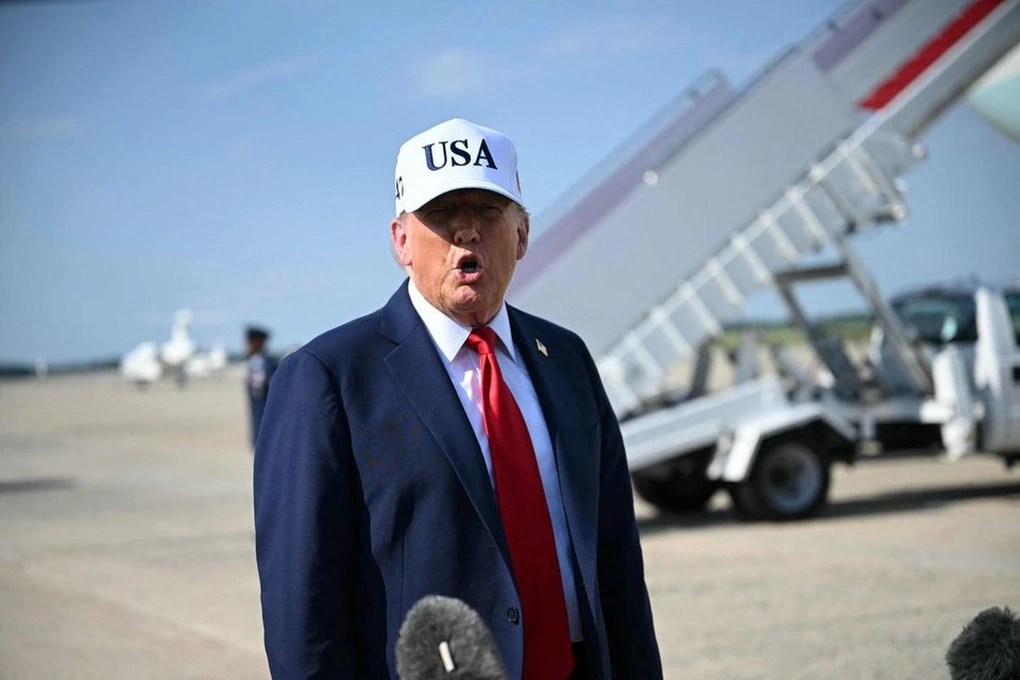
In a sharp escalation of trade tensions, U.S. President Donald Trump announced on Thursday that the United States will impose a 35% tariff on Canadian imports starting August 1, marking a significant increase from the current 25%.
The move is part of a broader plan to introduce blanket tariffs of 15% to 20% on most other U.S. trading partners.
Trump conveyed the new tariff policy in a letter addressed to Canadian Prime Minister Mark Carney, warning that any retaliatory measures by Canada could trigger further increases. An exemption under the existing United States-Mexico-Canada Agreement (USMCA) is expected to remain in place, along with a 10% tariff cap on energy and fertilizer—though final decisions on these items are still pending, according to a U.S. official.
The letter also linked the tariff decision to non-trade issues, including the flow of fentanyl across the northern border. Trump suggested that cooperation from Canada in curbing fentanyl could influence the tariff terms.
Carney responded publicly via social media, reaffirming Canada’s commitment to protecting its workers and continuing dialogue with the U.S. government. He also noted that Canada had made significant progress in efforts to stem fentanyl trafficking and pledged further cooperation.
The tariff hike deals a blow to Prime Minister Carney, who had prioritized securing a new trade and security agreement with the United States by July 21. Canada, the second-largest U.S. trading partner after Mexico, exported $412.7 billion to the U.S. last year while importing $349.4 billion.
Trump’s tariff campaign is not limited to Canada. New duties have already been levied on Japan, South Korea, and copper imports, and the European Union could be next. Investors reacted with concern as markets in Asia dipped, anticipating potential fallout if tensions mirror those of the 2018–2019 U.S.-China trade war.
Trump’s aggressive tariff stance is prompting global leaders to seek diplomatic engagement. Myanmar’s military junta reportedly requested a reduction in its current 40% U.S. tariff rate and expressed willingness to send a delegation to Washington. Meanwhile, the Philippine president is scheduled to meet Trump this month in Washington to discuss the 20% duty on Philippine goods.
In a separate interview, Trump signaled that formal letters to each country may not be necessary, asserting that blanket tariffs of 15% to 20% will soon apply to “all remaining countries.”
As global markets brace for further disruption, the outcome of these negotiations and potential retaliatory measures from affected nations will be closely watched by investors, diplomats, and businesses alike.
Related
Discover more from Vietnam Insider
Subscribe to get the latest posts sent to your email.
Source: Vietnam Insider