

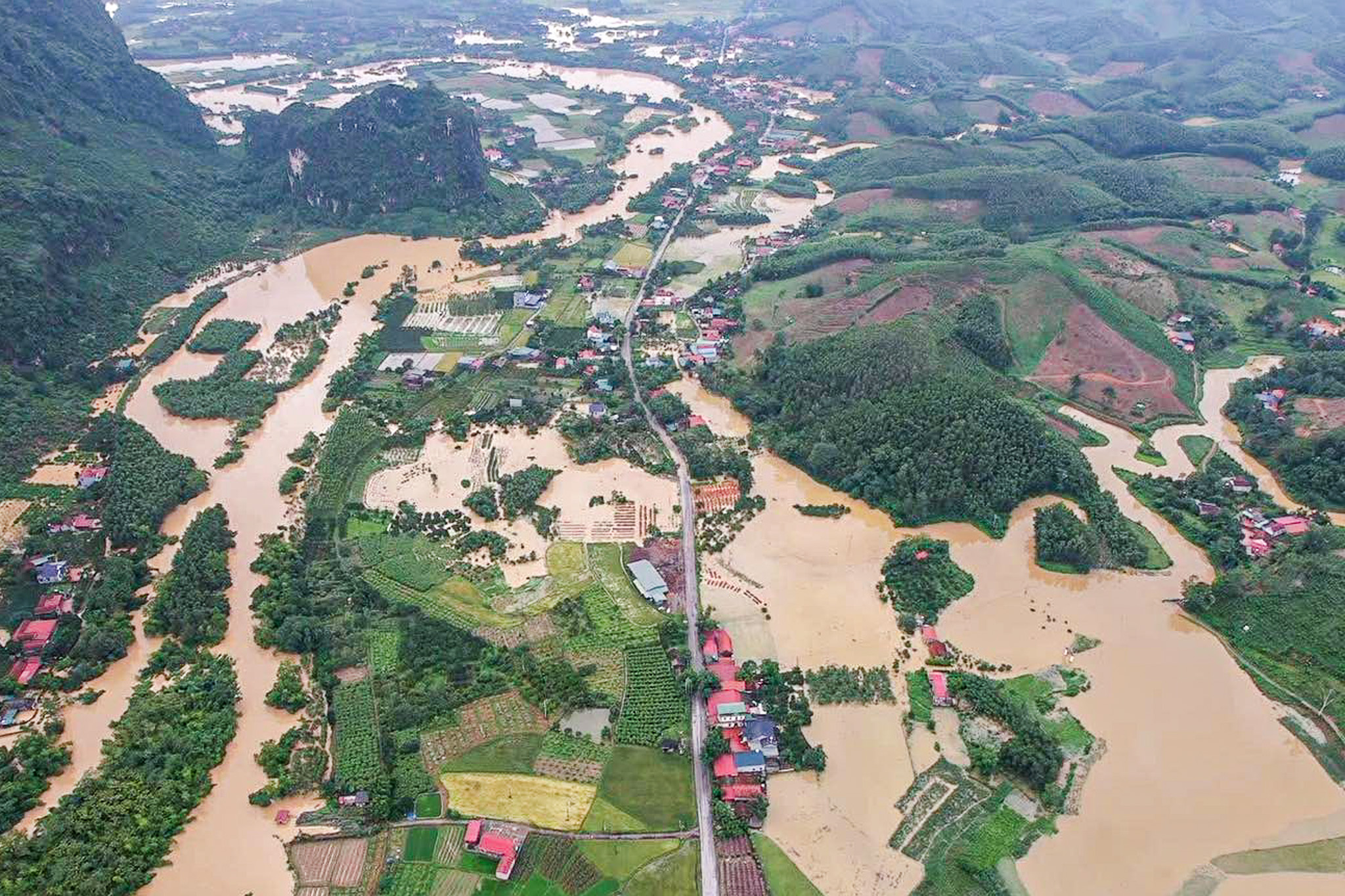
Northern Vietnam is bracing for another wave of heavy rainfall, extending over four days, as meteorological conditions driven by a low-pressure trough and active cyclonic circulation intensify across the region. According to the National Center for Hydro-Meteorological Forecasting, this extended bout of rain is expected to significantly impact both urban centers and remote mountainous areas, compounding concerns over flooding, landslides, and infrastructure disruptions.
The latest development follows an already historically wet June in the northern provinces, with rainfall totals shattering decades-old records. This anomalous weather pattern underscores growing climate volatility in the region and poses mounting challenges for disaster preparedness, urban planning, and economic continuity.
Rainfall began intensifying earlier this week, with localized amounts ranging from 30 to 70 millimeters. However, forecasts warn that some areas could receive over 150 millimeters within a single event, with short-term rainfall exceeding 100 millimeters in just three hours. From Thursday onwards, precipitation is expected to blanket the entire northern region, with cumulative totals likely reaching between 70 to 150 millimeters across broad areas.
In extreme cases, 24-hour rainfall could exceed 300 millimeters, while isolated downpours may deliver over 150 millimeters in just three hours—posing acute risks to drainage systems, transportation networks, and hillside communities.
As a silver lining, the rain is projected to bring relief from the intense heatwave that has gripped northern Vietnam. In Hanoi, where temperatures peaked at 38 degrees Celsius on Tuesday, forecasts from AccuWeather anticipate a gradual cooling trend, with highs falling to 26–31 degrees Celsius by Saturday.
The meteorological agency has issued warnings about potential flooding in low-lying urban districts, industrial zones, and rural plains. Small rivers and streams may experience sudden surges, heightening the risk of flash floods, while landslides remain a serious threat in mountainous and sloped regions already weakened by weeks of saturation.
Floodwaters have already been reported in Thai Nguyen, Bac Ninh, and Son La provinces. Landslides have disrupted traffic and logistics on key provincial and national highways, illustrating the immediate economic and logistical consequences of the ongoing weather patterns. These disruptions are likely to strain provincial disaster response capabilities and may further affect agricultural output and rural livelihoods.
Weather specialists and climate analysts note that Vietnam’s northern regions are witnessing a shift in seasonal norms. In June alone, Hanoi and surrounding provinces recorded 20 days of rain—far above the historical average. This includes record-setting totals in several provinces: Thai Nguyen received 994 millimeters, surpassing its 1979 record; Son La reached 379 millimeters, beating a 1995 high; Lang Son registered 442 millimeters, eclipsing its 1978 benchmark; and Bac Giang tallied 562 millimeters, breaking a record from 1986.
Such anomalies raise questions about the increasing frequency of extreme weather events and their implications for long-term infrastructure planning and water resource management. Experts argue for stronger investment in resilient infrastructure and climate-adaptive urban development, particularly in flood-prone and rapidly urbanizing areas.
While the upcoming rainstorm is forecast to ease the region’s extreme heat, the short-term risks it brings are substantial. Provincial authorities are on alert, with emergency response plans activated in areas most at risk. However, continued rainfall and saturated terrain mean that even minor weather fluctuations could result in significant hazards.
Looking ahead, Vietnam’s northern provinces may face prolonged meteorological instability as climate patterns continue to diverge from historical norms. For international observers, investors, and policymakers, these developments underscore the urgency of integrating climate resilience into Vietnam’s growth model—especially as the country deepens its role in global manufacturing and trade networks.
Related
Discover more from Vietnam Insider
Subscribe to get the latest posts sent to your email.
Source: Vietnam Insider