

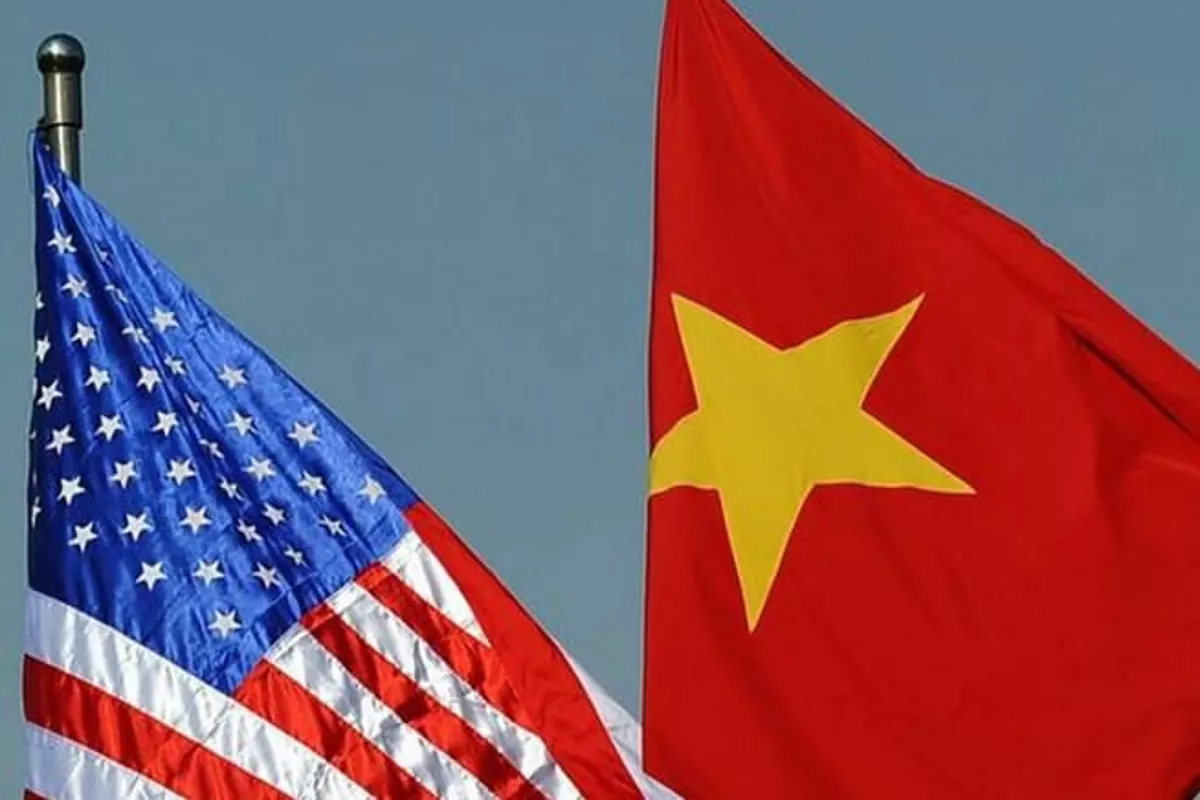
Negotiators from Vietnam and the United States have reached agreement on a Joint Vietnam-U.S. Statement outlining the framework for a reciprocal, fair, and balanced trade agreement.
At the government’s regular June 2025 meeting on July 3, Finance Minister Nguyen Van Thang reported this breakthrough, highlighting that Vietnam’s economic growth has reached its highest level in nearly 20 years, with key production, business, and fiscal indicators showing strong performance.
Negotiation Outcome Inspires Business Confidence
According to Minister Thang, the joint statement between the two nations was agreed upon during talks on July 2. On the same day, General Secretary To Lam held a phone conversation with U.S. President Donald Trump, reaffirming the countries’ comprehensive strategic partnership and discussing key directions and major initiatives to strengthen cooperation, particularly in breakthrough areas such as high-tech science and technology.
“This is a significant negotiation outcome that builds trust and optimism among the business community,” Minister Thang affirmed.
In addition to the positive news on trade relations, Vietnam’s processing and manufacturing sector grew 10.65% in the first half of the year—hitting targets and marking one of the few years since 2011 to see double-digit six-month growth. Exports rose 14.4%, with a trade surplus estimated at USD 7.63 billion. Realized foreign direct investment (FDI) exceeded USD 11.7 billion, up 8.1%.
A total of 152,700 enterprises entered or re-entered the market in the first half—20% more than those that exited (127,200 businesses). In June alone, nearly 24,400 new businesses were established, a record high, with total registered capital of nearly VND 177 trillion (up 60.5% in number of enterprises and 21.2% in capital compared to the same period last year).
Minister Thang also noted that on June 30, all 34 provinces simultaneously announced central and local resolutions and decisions on administrative restructuring and the formation of new provincial party committees and local leadership teams. This allows the new two-tier local government system to officially begin operation from July 1.
“This marks a new phase of development for our state administrative apparatus, streamlining political institutions to be more synchronized, efficient, and effective,” Thang said, adding that public confidence and national pride have been lifted, creating new momentum as the country enters a new era.
Economic Challenges Ahead
Despite these achievements, Minister Thang warned that Vietnam’s economy will continue to face significant challenges in the coming period. He called for all levels of government to act proactively and decisively to meet their assigned tasks.
The Ministry of Finance highlighted key difficulties, including challenges in meeting the 2025 growth target, ongoing macroeconomic pressures—especially in exchange rate and interest rate management—and the slow pace of institutional and legal reforms. The livelihoods of some citizens and workers also remain difficult.
In terms of solutions, Minister Thang stressed the need for swift issuance and effective implementation of government directives, close monitoring of the new two-tier governance system, and prompt resolution of any regulatory or procedural bottlenecks.
Vietnam will continue to promote exports, develop harmonious and sustainable trade relations, refine its legal and institutional frameworks, and improve the business environment. The country also aims to strengthen traditional growth drivers—such as investment and domestic consumption—while fostering new engines of growth.
Related
Discover more from Vietnam Insider
Subscribe to get the latest posts sent to your email.
Source: Vietnam Insider