

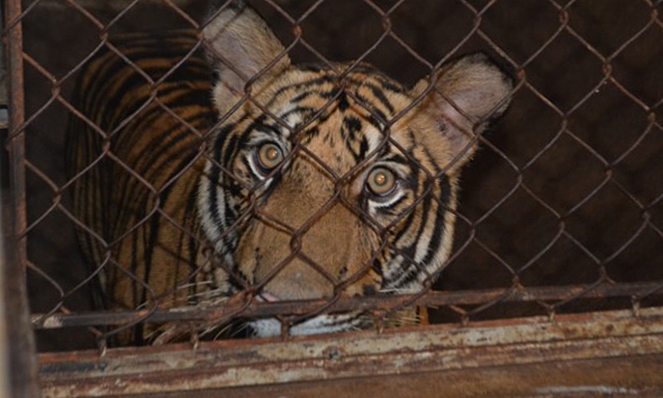

Vietnam Insider – A frozen tiger carcass weighing approximately 200 kilograms was discovered concealed in a custom-built secret compartment on the roof of a passenger bus traveling from Laos to Son Giang commune (formerly part of Huong Son district, Ha Tinh province).
On August 13, the Ha Tinh Provincial Police’s Investigation Department announced the criminal prosecution and temporary detention of three men from Nghe An province: Chu Van Lam (36), Nguyen Trong Hung (46), and Ngo Sy Bac (38). The trio faces charges of violating wildlife protection regulations under Article 244, Clause 2 of Vietnam’s Penal Code, which prohibits the trafficking of endangered, precious, and rare animal species.
On July 26, law enforcement officers stopped a Laos-registered bus passing through Son Giang commune and uncovered a hidden compartment measuring 3 to 4 square meters in area and 30 to 40 centimeters in height. Inside, they found a frozen tiger carcass weighing around 200 kg along with a complete tiger skeleton.
Authorities confirmed that the animal belonged to Group IB of Vietnam’s endangered species list—classified as a critically endangered wild species whose hunting, trading, or commercial exploitation is strictly prohibited under Vietnamese law.
Lam, Hung, and Bac were reportedly assistant drivers for the Sau Hoa passenger transport company. They are accused of concealing the tiger body and bones inside the bus’s roof compartment to smuggle them from Laos into Vietnam.
The bust highlights an ongoing challenge faced by conservation and enforcement agencies in central Vietnam. According to authorities, illegal trafficking and processing of wild animals—including tigers and monkeys—continues to occur covertly in rural areas of Ha Tinh and Nghe An provinces. These animals are often used to produce traditional medicinal products such as animal glue, which is sold at high prices on the black market.
A single tael (approximately 37.5 grams) of tiger glue can fetch up to VND 18 million (around USD 700), while monkey glue sells for VND 400,000 to 500,000 (USD 15–20) per tael. Despite increased enforcement efforts, the high profitability of these products continues to drive demand and illegal poaching.
Vietnam has made significant commitments to wildlife conservation and has strengthened its laws on the protection of endangered species. However, incidents like this underscore the ongoing need for stricter monitoring and international cooperation to combat cross-border wildlife trafficking.
Related
Discover more from Vietnam Insider
Subscribe to get the latest posts sent to your email.
Source: Vietnam Insider