

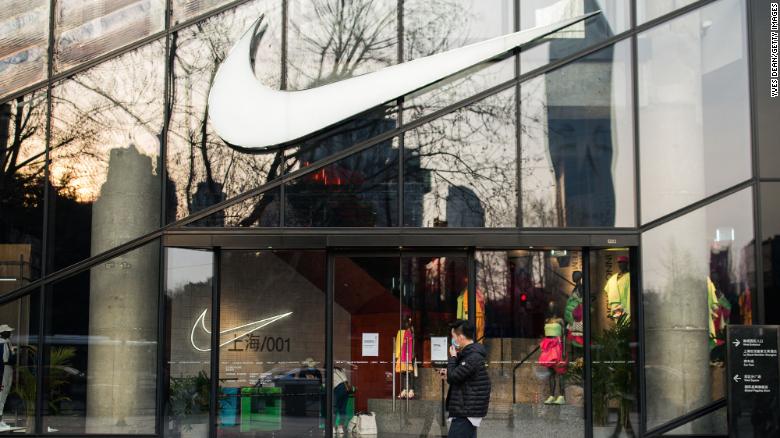

Major American corporations including Apple, Intel, and Nike are pressing the U.S. government to lower tariffs on Vietnamese imports, emphasizing Vietnam’s critical role in their global supply chain diversification strategies.
In a letter addressed to both U.S. and Vietnamese officials, obtained by the Financial Times, the American Chamber of Commerce in Hanoi warned that high tariffs could undermine U.S. strategic interests in Southeast Asia. The letter follows the Trump administration’s imposition of a 46% tariff rate on Vietnamese goods in April — one of the highest after China — although the measure has been temporarily suspended pending ongoing trade negotiations.
“Vietnam has emerged as a key partner for the U.S. in supply chain diversification,” the Chamber stated. “We urge the U.S. government to view this trade deficit as a sign of success in President Trump’s first-term efforts to diversify supply chains within the Indo-Pacific region.”
The Chamber further cautioned that tariffs remain a “critical issue” for American businesses operating in Vietnam, noting that higher duties would adversely impact companies, consumers, and the broader bilateral trade relationship.
Vietnam’s importance in global supply chains continues to grow. The country now produces nearly half of Nike’s global footwear output, prompting the company to consider price increases due to tariff risks. Meanwhile, Apple is expected to manufacture two-thirds of its AirPods in Vietnam by the end of this year.
These lobbying efforts are intensifying as countries seek to finalize agreements with Washington before the 90-day tariff suspension window closes on July 9. The third round of U.S.-Vietnam negotiations is scheduled for mid-June.
On June 4, a ministerial-level negotiation took place in Paris between Vietnam’s Minister of Industry and Trade Nguyen Hong Dien, head of the government negotiation team, and Jamieson Greer, the U.S. Chief Trade Representative. Minister Dien reiterated Vietnam’s goodwill and determination to reach a mutual understanding with the U.S., presenting Vietnam’s formal responses to supplemental concerns raised by Washington.
Greer praised Vietnam’s constructive approach and reaffirmed that Vietnam, as a comprehensive strategic partner of the U.S., plays a crucial role in achieving a fair and timely bilateral agreement on reciprocal tariff policies. He also offered practical solutions to address complex issues in the negotiation process.
Both ministers agreed on the urgency of accelerating negotiations and pledged to make substantial progress in the upcoming technical round.
Legal Insight: Comment from Sophie Dao, Senior Partner at GBS
“The current U.S.-Vietnam trade dialogue is a litmus test for how strategic partnerships can influence trade policy in an increasingly multipolar world,” said Sophie Dao, Lawyer and Senior Partner at GBS, a leading legal and business consultancy in Vietnam. “Reducing tariffs will not only ease the burden on U.S. multinationals but also enhance Vietnam’s position as a reliable hub for global manufacturing and high-tech assembly.”
Dao added: “For foreign investors, this is a strong signal that Vietnam’s economic diplomacy is maturing. Businesses should view this as an opportunity to align their regional strategies with Vietnam’s upward trajectory in global trade.”
Related
Discover more from Vietnam Insider
Subscribe to get the latest posts sent to your email.
Source: Vietnam Insider