

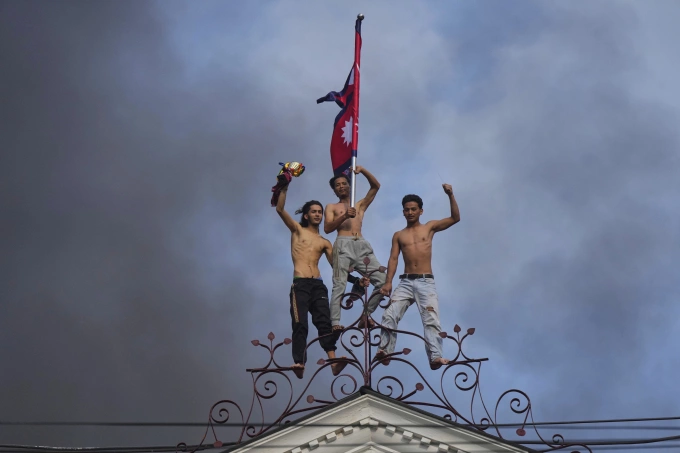

Nepal, a nation of nearly 30 million people, has an economy roughly comparable to Cambodia’s, with a 2024 GDP of about USD 50 billion. Its unemployment rate hovers around 10%, and approximately 82% of the population works in informal or freelance jobs.
Remittances from Nepalese working overseas amount to around 11 billion USD, representing over 25% of GDP. Remarkably, many Nepalese—due to acute economic desperation—have reportedly traveled to Russia to fight in Ukraine in exchange for compensation, risking their lives in the process. These figures lay bare a systemic failure in national governance.
Generation Z in Nepal (born 1997–2012) stands out from previous generations. They are less defined by ideological loyalties or historical legacies and have been exposed to global views earlier—thanks to the internet. They grew up with social media, have a keener sense of global norms, and are less preoccupied with immediate survival struggles than their parents were.
As a result, even a relatively small government misstep—like a social media ban modeled on restrictive approaches seen in countries such as China—can become a catalyst for widespread outrage and collective action.
Frustration has been building for some time over limited job opportunities and the glaring social inequities between the common populace and an elite class of political dynasties. This sentiment has coalesced around the “NepoBaby – NepoKids” (i.e., “children of elites”) movement in recent days. Youth are openly denouncing the luxuries flaunted by politicians’ offspring against the backdrop of poverty that many young people endure.
This movement demonstrates that Nepal’s youth—and, indeed, many in South Asian countries like Indonesia or Bangladesh—are developing a deeper, more critical awareness of governance issues. Given their readiness to mobilize, a small spark—from unjust laws, worsening inequality, or internet censorship—can ignite widespread demands for change.
The government banned access to 26 social media platforms, including Facebook, X, WhatsApp, and YouTube, for not registering under new regulatory rules. This triggered nationwide protests led primarily by Gen Z—resulting in at least 19 deaths and over 100 injuries. In response, the ban was quickly lifted, and an investigation panel was announced.
Observers and protesters alike emphasized that the ban was just the tipping point. Core grievances include youth unemployment, lack of economic opportunity, corruption, and the visible privilege of political elites.
Remittances remain a vital economic lifeline—generating close to a third of Nepal’s GDP—highlighting the fragile domestic job market and emigration pressures.
Nepal’s recent youth-led protests illustrate how economic precarity, digital activism, and frustration with political inequity can converge rapidly—especially among a tech-savvy, socially conscious generation. What may have begun as opposition to a social media ban soon became a broader expression of rage against entrenched corruption and stagnation.
Nepal is not just a case study in political unrest—it is a reminder of how fragile social legitimacy can become when youth’s aspirations are ignored. As Vietnam and other Southeast Asian countries confront similar challenges—rising youth expectations, digital mobilization and inequality—Nepal serves both as a warning and a potential catalyst for reflection.
Related
Discover more from Vietnam Insider
Subscribe to get the latest posts sent to your email.
Source: Vietnam Insider