

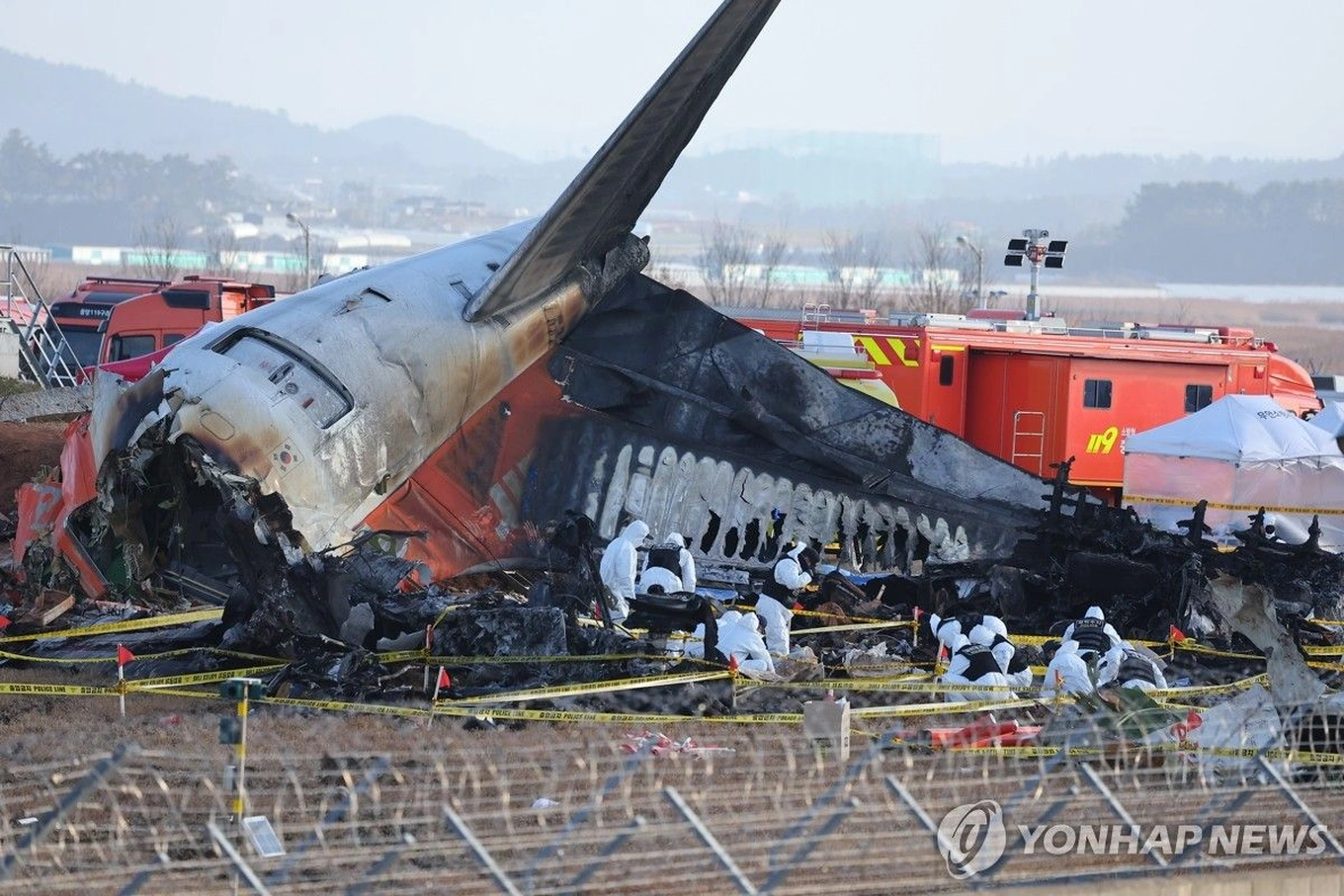

A Jeju Air pilot is suspected of mistakenly shutting down the less damaged engine following a bird strike during a landing attempt at Muan Airport, South Korea, in late December last year — a critical error that may have led to the country’s deadliest aviation disaster, resulting in 179 fatalities.
Investigation Reveals Critical Misjudgment
According to a Reuters report on July 21 citing sources close to the investigation, a multinational probe led by South Korean authorities has uncovered “clear evidence” indicating that the pilot turned off the aircraft’s left engine — which was less damaged — instead of the right engine, which had sustained more severe impact from the bird strike.
Data recovered from the cockpit voice recorder, onboard computer systems, and engine control switches found in the wreckage supports this conclusion. A source familiar with the matter stated, “The investigation team has robust data and evidence, and this conclusion will not change,” speaking on condition of anonymity due to the confidential status of the preliminary report.
Further analysis by South Korean government officials of the two engines recovered from the crash site confirmed that neither engine showed signs of malfunction prior to the bird strike that preceded the crash.
Deadliest Aviation Tragedy in South Korea’s History
The fatal crash occurred on December 29, 2024, at Muan International Airport, involving a Jeju Air Boeing 737-800. The aircraft was carrying 179 passengers and crew members — all of whom perished, except for two surviving flight attendants. It is now considered the deadliest aviation accident to ever occur on South Korean soil.
At a press briefing with victims’ families last weekend, investigators reported that the right engine had sustained more damage due to the bird strike compared to the left engine. They also revealed indirect evidence suggesting the pilot shut down the less damaged left engine during the emergency response.
These findings were reported by major Korean news outlets, including MBN and Yonhap News Agency. However, the Korean Aviation and Railway Accident Investigation Board (ARAIB), which is leading the inquiry, has declined to comment. Aircraft manufacturer Boeing also refused to respond, while CFM International — the joint venture between GE (U.S.) and Safran (France) that manufactured the engines — has yet to issue a statement.
Jeju Air has stated it is fully cooperating with ARAIB and is awaiting the official release of the investigation results.
Growing Tensions and Delayed Report Release
According to international aviation regulations, a final accident report is typically published within one year of the incident. A preliminary report issued in January noted the presence of bird remains in both engines but did not detail the extent of damage to each.
On July 19, ARAIB abruptly canceled a planned media briefing to provide an updated report following objections from victims’ families. Legal representatives argued that the draft report appeared to place disproportionate blame on the pilot without fully investigating other contributing factors.
Runway Collision and Explosion Worsened Casualties
The Jeju Air aircraft reportedly landed belly-first on the runway before skidding off and striking a concrete barrier housing navigation equipment. The collision triggered a fire and partial explosion, compounding the tragedy.
Both the victims’ families and Jeju Air’s pilots’ union have demanded that investigators also examine the role of the barrier in the unusually high death toll. The union accused ARAIB of “misleading the public” by downplaying damage to the left engine, despite evidence of bird remains in both engines. It also criticized the agency for failing to address the potential accountability of airport authorities or aviation regulators.
Representatives for the victims’ families expressed concern that some language in the draft report may be misinterpreted as conclusive, reiterating that all aspects of the crash must be thoroughly examined before any official report is released.
Related
Discover more from Vietnam Insider
Subscribe to get the latest posts sent to your email.
Source: Vietnam Insider