

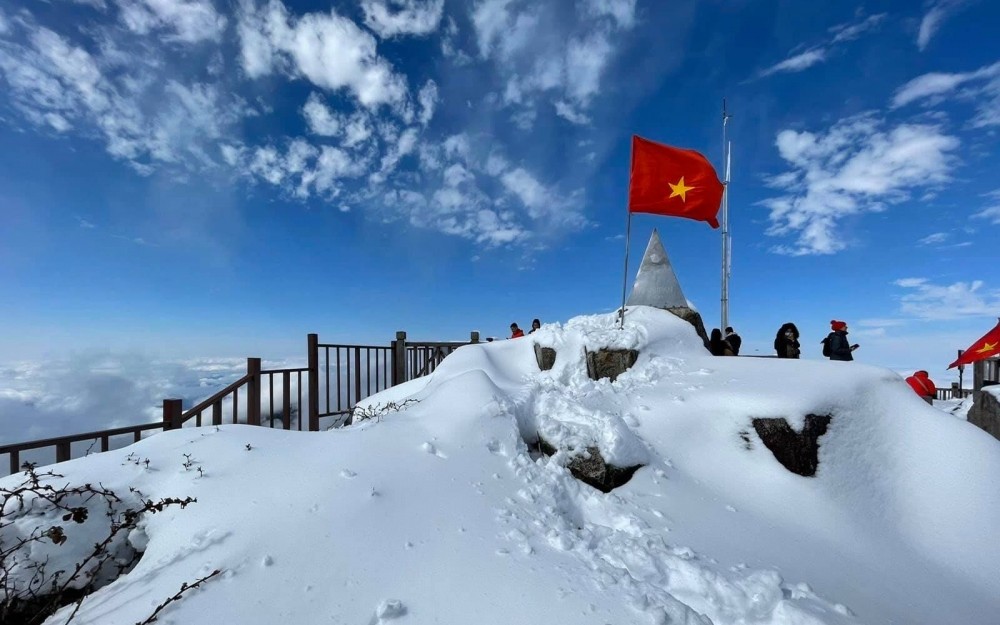

HANOI, Nov 11 (Vietnam Insider) — Northern Vietnam is expected to experience its strongest cold spell since the start of winter around November 16–17, with temperatures plunging sharply across the region, according to the National Center for Hydro-Meteorological Forecasting.
Meteorologists warn that the cold air mass — the most intense of the 2025–2026 winter so far — will bring temperatures below 16°C in lowlands, below 13°C in mid-mountain areas, and under 5°C in high-altitude regions such as Sa Pa and Mau Son.
Cold Air Builds Ahead of Major Temperature Drop
From the night of November 10, weak cold fronts have already begun to move southward, ending weeks of humid and foggy weather across the North. Between now and November 15, forecasters expect intermittent weak reinforcements of cold air, combined with northerly and northwesterly winds at altitudes of 1,500–5,000 meters, keeping skies mostly clear and sunny before the major cold front arrives.
However, by November 16, a powerful surge of polar air will sweep through, marking a sharp transition to true winter conditions.
-
Lowland areas (Hanoi, Hai Phong, Nam Dinh): daytime highs around 20°C, night lows 13–15°C
-
Mid-mountain regions (Ha Giang, Son La, Lao Cai): lows 8–12°C
-
High mountains (Sa Pa, Mau Son, Sin Ho): lows may dip to 4–5°C
U.S.-based weather service AccuWeather forecasts Hanoi’s temperature range will fall from 17–27°C this week to 12–23°C next week, while Sa Pa could drop to 5°C at night.
Central Vietnam to Feel Chill Next
The Central region, from Thanh Hoa to Ha Tinh, will begin feeling the effects of the cold air mass on November 17, with temperatures dropping below 16°C, and mountainous areas below 13°C.
This marks the fifth cold front to affect Northern Vietnam in just over a month. The last strong one on October 19 saw Mau Son (Lang Son) dip to 9°C, while Tam Dao (Phu Tho) and Sin Ho (Lai Chau) recorded lows near 12°C.
Experts: Early and Harsher Winter Due to La Niña
According to Dr. Nguyen Binh Phong of the Hanoi University of Natural Resources and Environment, Vietnam’s cold season is arriving earlier and stronger than average, largely due to the ongoing La Niña phenomenon, which typically brings cooler and wetter conditions to East and Southeast Asia.
“La Niña is expected to persist into early 2026,” Dr. Phong said. “That means this winter — and especially the period from December 2025 to February 2026 — could see more frequent and intense cold waves compared to last year.”
More Cold Fronts Ahead
Between November and December 2025, cold air is forecast to increase in both frequency and strength. Average monthly temperatures in the northeast region, as well as Thanh Hoa to Da Nang and eastern Quang Ngai, are projected to be 0.5–1°C below the multi-year average, while other regions may see temperatures around 0.5°C lower.
Vietnam’s north is heading into its coldest period yet this season, with frost likely in mountain towns like Sa Pa and Mau Son. Forecasters attribute the early, harsh onset of winter to La Niña, which may prolong cooler conditions well into early 2026 — signaling a colder, longer winter for much of the country.
Related
Discover more from Vietnam Insider
Subscribe to get the latest posts sent to your email.
Source: Vietnam Insider