

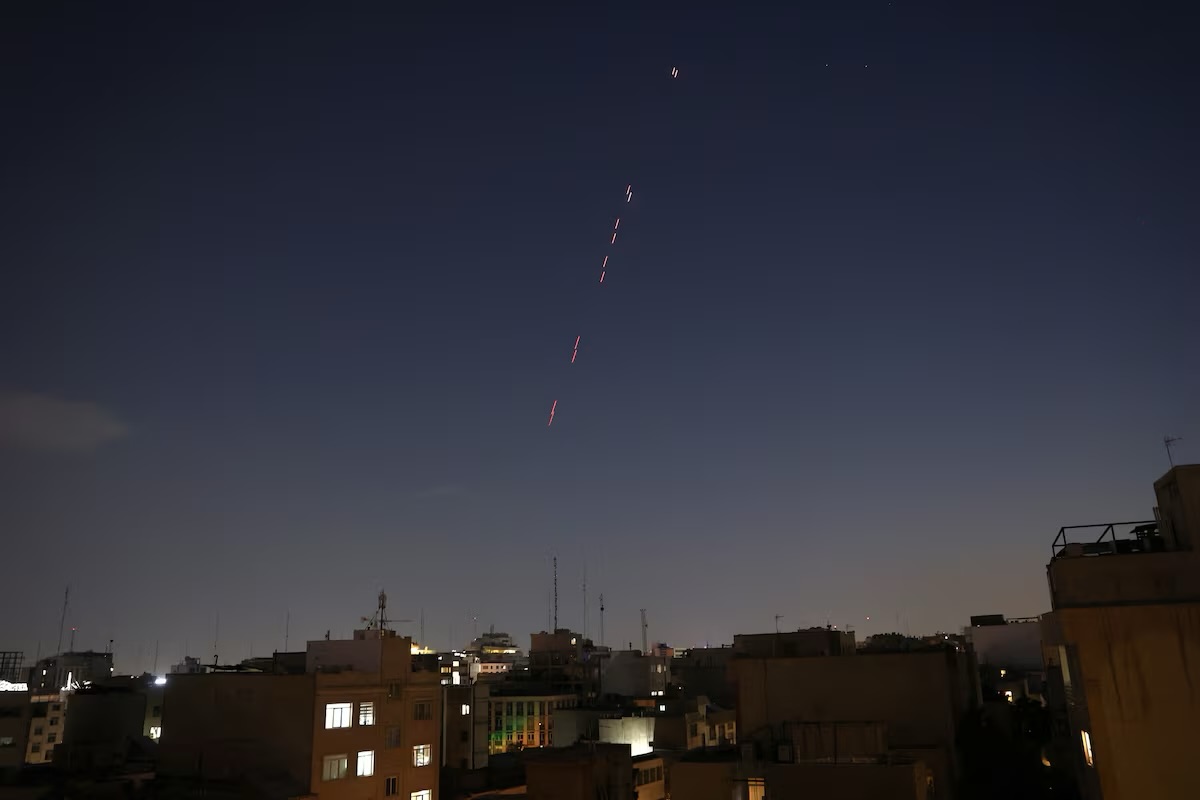

The Middle East is on the brink of historic escalation as Israel launches a bold wave of airstrikes deep into Iranian territory, prompting fierce warnings from Hezbollah and a chilling nuclear alert from Russia. A new geopolitical axis—Iran–Hezbollah–Russia—is rapidly forming, signaling the most dangerous regional escalation since World War II.
✈️ Tehran Under Attack: Israeli Air Force Bombs Capital
In the early hours of June 20, explosions rocked Tehran as Israeli warplanes struck the Lavizan district, home to several top-secret Iranian military installations. This marks Israel’s first direct strike into the heart of Iran’s military command in years.
Separately, a Revolutionary Guard base in East Azerbaijan province was hit by drones, resulting in multiple casualties.
Analysts confirm this is no longer a tit-for-tat exchange—it’s a coordinated campaign targeting the core of Iran’s defense infrastructure.
Hezbollah: “We Will Not Stand Aside”
Following the attacks, Hezbollah’s deputy leader, Naim Qassem, issued a fiery statement:
“The U.S. President’s threats to strike Iran’s Supreme Leader are not just provocative—they’re a declaration of war on the entire Middle East. Hezbollah will not remain neutral and will respond appropriately to any act of aggression.”
This declaration raises the specter of a new front opening in northern Israel, where Hezbollah holds significant power along the Lebanon border.
☢️ Russia Issues Nuclear Warning: “A New Chernobyl Is Possible”
In a stark and unprecedented warning, Russia’s Security Council Deputy Chair Dmitry Medvedev stated:
“Israeli strikes on Iran’s nuclear facilities risk triggering a large-scale nuclear catastrophe—potentially another Chernobyl, this time in the Middle East.”
Beyond a humanitarian alert, Medvedev’s message hinted that Russia may intervene directly if regional stability—or Russian interests in the Caucasus—are threatened.
Global Fallout: Oil, Markets, and Financial Panic
Oil prices have spiked sharply amid fears of supply disruption across the Gulf region.
Stock markets worldwide have begun to wobble, pricing in the risk of full-scale war.
Gold and safe-haven assets are seeing surging inflows, as investors brace for a prolonged crisis—not just a short-term flare-up.
Two Scenarios Lie Ahead
Full-Scale War: If Israel targets Iran’s nuclear infrastructure and Tehran retaliates with ballistic missiles, a direct U.S.–Iran conflict could erupt—dragging in Hezbollah, Russia, and other regional proxies.
️ Negotiation Amid Chaos: A tactical ceasefire could still be brokered—possibly by China or Turkey—but only if Israel halts before crossing Iran’s red lines.
Conclusion: The Proxy War Era May Be Over
The Middle East is no longer a simmering flashpoint—it’s now the epicenter of a looming global conflict.
With nuclear warnings, expanding alliances, and open declarations of war, the boundary between proxy warfare and direct confrontation between nuclear powers is vanishing. The world must prepare—not just diplomatically, but economically and militarily—for the worst-case scenario.
Related
Discover more from Vietnam Insider
Subscribe to get the latest posts sent to your email.
Source: Vietnam Insider