

 |
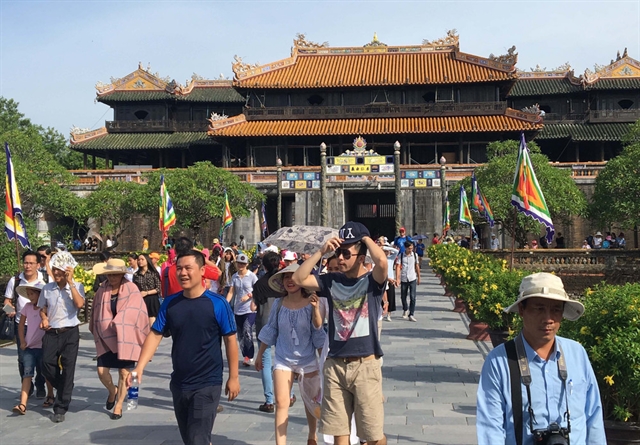
| Huế is refining its tourism strategy to better harness its rich cultural assets as a long-term driver of sustainable socio-economic development. — VNA/VNS Photo |
HUẾ — Placing the community at the centre of heritage development, Huế is recalibrating its tourism strategy to transform its cultural wealth into a sustainable engine of socio-economic growth.
The heritage city on the banks of the Hương (Perfume) River in central Việt Nam has long been regarded as a “living museum” of Vietnamese culture. However, beneath that richness lies a lingering paradox: while tourism products are plentiful, their overall appeal and connectivity remain limited.
In response, municipal authorities are shifting their approach, positioning local residents as the core stakeholders in heritage development. The aim is to ensure that communities not only safeguard and revitalise cultural values but also directly benefit from them, turning heritage into a dynamic resource rather than a static asset.
Diverse offerings, but lacking momentum
From its complex of palaces, royal tombs and pagodas to traditional craft villages and both courtly and folk cuisine, Huế possesses a wealth of cultural assets. Coupled with its unhurried pace of life and a calendar of colourful festivals, the former imperial capital boasts a tourism portfolio that few destinations can match.
A range of tourism products has emerged in recent years, spanning heritage tours, community-based experiences, craft village visits, wellness services, spiritual tourism, gastronomy, and night-time economy activities.
Yet despite this diversity, most offerings remain modest in scale and loosely connected. Limited integration and a lack of in-depth experiences have prevented the formation of a strong tourism ecosystem, leaving the city struggling to persuade visitors to stay longer and spend more.
Following the box-office success of Mắt Biếc (Dreamy Eyes), several film-associated sites in Huế saw a surge in young visitors. Cafés, photo spots and tour services sprang up in response to the cinematic effect.
However, as the film’s popularity waned, many of these spontaneously developed models also lost momentum. The trend highlighted the city’s strong potential to connect culture, creativity and tourism, while underscoring the need for a long-term strategy and a sustainable supporting ecosystem.
At the same time, many of Huế’s traditional crafts are struggling to assert their place in contemporary life.
Once emblematic of the former imperial capital, several craft villages are now at risk of decline due to unstable market outlets. Their continued existence depends largely on the commitment of individual artisans rather than on a structured and sustainable tourism value chain.
In Sình Village, artisan Phạm Công Khai remains one of the few practitioners preserving a more than 400-year-old tradition of folk woodblock printing.
Each day, he meticulously carves wooden blocks and prints votive paintings depicting the 12 zodiac animals. Yet amid mounting industrial pressures and changing consumer habits, the craft faces the threat of fading away without dedicated space for display, hands-on experiences and product distribution.
Similarly, Trần Đại Nghĩa, a renowned tò he (traditional rice dough figuriner) artisan in Hương Thủy Ward, noted that the craft now largely survives through experiential sessions for schoolchildren.
With each figurine priced at between VNĐ15,000 (US$0.60) and VNĐ35,000 (US$1.40), income remains modest and insufficient to ensure a stable livelihood without additional support such as event spaces, night markets or organised workshops.
Nghĩa expressed his hope that the city would create more appropriate platforms to enable the craft to thrive within the wider community.
 |
| Initiatives such as the revival of the traditional áo dài and digital start-ups centred on heritage cuisine have underscored the pivotal role of young people in Huế in generating fresh cultural momentum. VNA/VNS Photo |
Heritage
According to Phan Thanh Hải, director of the municipal Department of Culture and Sports in Huế, the locality holds an extensive treasure trove of tangible, intangible and natural heritage.
However, he noted that current approaches to exploitation remain largely “static”, falling short of unlocking the full potential of the heritage ecosystem. For heritage to develop sustainably, it must exist within the community and resonate with contemporary life, with local people placed at the centre of the process.
Experience has shown that when residents are enabled to participate directly in tourism activities, heritage is naturally revitalised.
A series of Lunar New Year events marking the Year of the Horse 2026 across wards and communes provided a clear example.
The involvement of artisans from traditional craft villages, alongside energetic and creative young people, created an intergenerational bridge, ensuring cultural continuity while promoting local identity. At the same time, traditional craft villages have received renewed attention, gradually restoring their relevance in modern life.
The “Tết Phú Xuân – Flavours and Colours of the Imperial Capital” programme held in Phú Xuân Ward this year attracted strong interest from young participants.
Nguyễn Minh Hoàng, a pupil at Trần Cao Vân Secondary School, said he was proud to take part in hands-on activities such as making tò he, crafting Thanh Tiên paper flowers and printing Sình folk paintings.
He noted that the programme not only helped him develop practical skills and unwind after a demanding academic year, but also enhanced his understanding of traditional crafts and strengthened his awareness of preserving the history and culture of his homeland.
Hoàng expressed his hope to further promote traditional crafts through social media posts, images and school competitions to help spread local cultural values more widely.
In recent years, initiatives such as the revival of the traditional áo dài and digital start-ups centred on heritage cuisine have underscored the pivotal role of young people in Huế in generating fresh cultural momentum.
By reinterpreting heritage through contemporary platforms, they are helping to reconnect tradition with modern life and ensuring that cultural values are both preserved and sustainably promoted.
Nguyễn Thị Minh Thư of Kim Trà Ward voiced her expectation that development rooted in heritage will enable the city to retain its distinctive ancient character while adopting a more dynamic approach to promotion.
Beyond its tangible assets, she said, Huế should capitalise on “soft resources” such as cinema, digital media and its growing community of young creatives to broaden its reach. The strategic use of videos, feature stories and social media campaigns could create a strong ripple effect and draw more visitors.
Alongside community engagement, technology is seen as a decisive factor in the city’s next phase of growth.
Cultural officials noted that applying digital technology and artificial intelligence to heritage preservation, promotion and interpretation would significantly expand access, particularly for younger audiences and international tourists.
Interactive 3D tours of royal tombs, multilingual audio guides via smart applications and digital storytelling platforms can transform heritage from a static display into an immersive, accessible experience.
Huế is also drawing impetus from Resolution 80-NQ/TW of the Politburo on developing Vietnamese culture. Under its renewed strategy, the city has identified heritage culture as a foundational pillar, closely tied to the community and supported by technological innovation to restructure the tourism sector.
When residents become both active creators and direct beneficiaries, heritage will evolve from a passive asset into an endogenous driver of sustainable development.
 |
| Huế stands before a significant opportunity for transformation. VNA/VNS Photo |
As the nation enters a new stage of advancement, Huế is expected to generate renewed momentum, integrating heritage into contemporary life and contributing more substantially to socio-economic growth.
To achieve this, Phan Thanh Hải emphasised the need for greater investment in the cultural sector and the development of a synchronised, modern institutional framework capable of unlocking the city’s full heritage potential.
The Year of the Horse 2026 is widely seen as a pivotal juncture.
With a clear orientation, development grounded in heritage, strengthened by community engagement and propelled by technology, Huế stands at a pivotal opportunity for transformation.
In this context, “swift success” is more than a seasonal greeting; it reflects the shared determination of cultural practitioners, tourism stakeholders and residents alike to ensure that heritage keeps pace with the times and becomes a sustainable engine of growth for the city. — VNS
Read original story on Vietnam News