

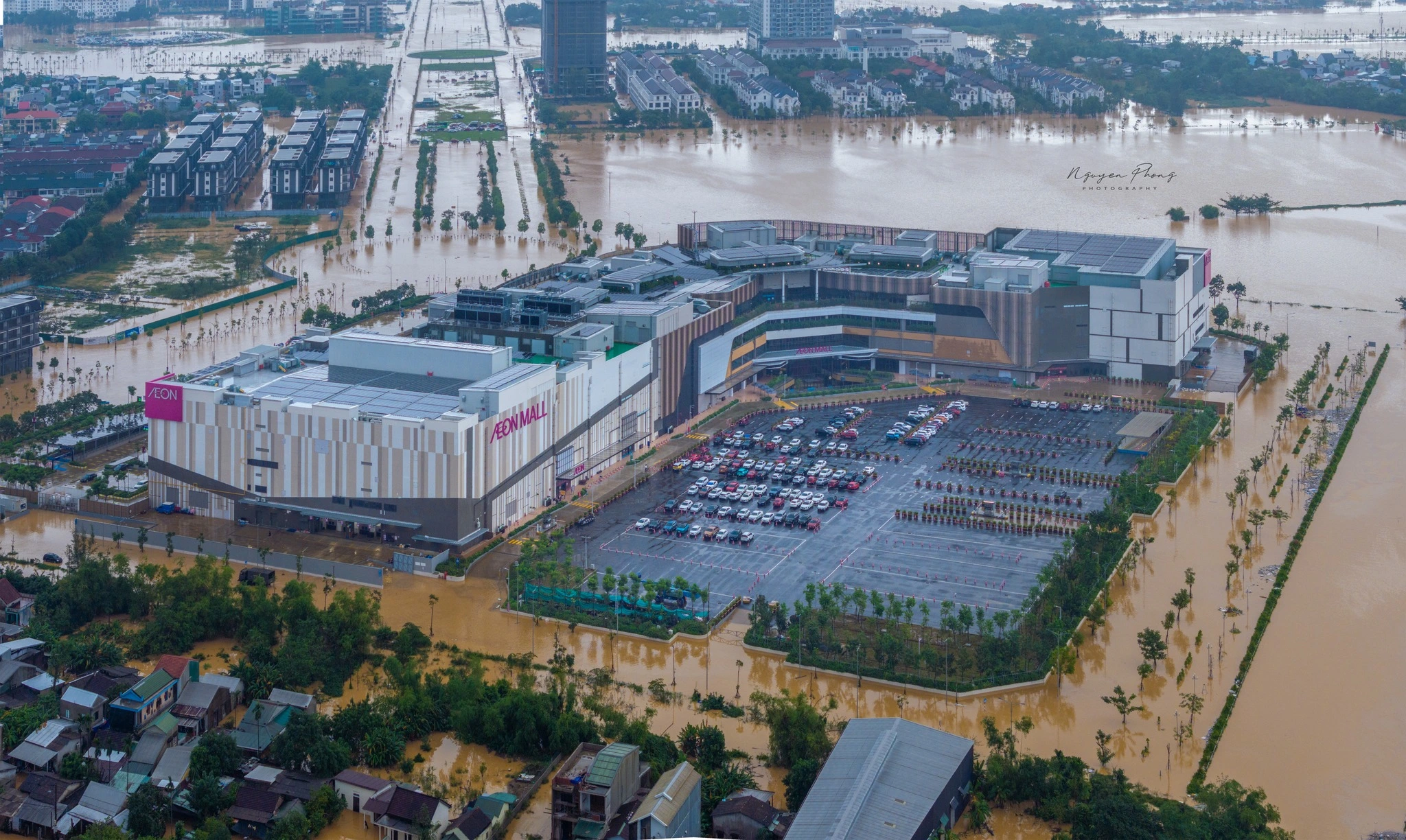

As central Vietnam endured one of its most severe floods in recent history, Aeon Mall Hue stood out as a striking anomaly: lights on, floors dry, and operations ongoing while surrounding streets transformed into rivers. The mall’s resilience has sparked widespread interest online, with many asking—how did this building survive when so much of the city was underwater?
70 Years of Flood Data, 1.15 Meters Higher
According to Imai Takeshi, General Manager of Aeon Mall Hue, the secret lies in meticulous planning and historical data. Before construction, Aeon Mall Vietnam analyzed 70 years of local flood records to determine safe building heights. The mall’s ground floor is elevated 1.15 meters above street level, complemented by advanced flood-prevention systems in the basement and throughout the building.
“Our design transforms Hue’s unique flood challenges into an architectural advantage,” Imai explained.
This foresight reflects the precision and long-term thinking typical of Japanese construction projects, turning what could have been a vulnerability into a defining feature of safety and reliability.
A Community Safe Haven Amid the Flood
Beyond structural resilience, Aeon Mall Hue acted as a critical support hub for the community. During the floods:
-
Free flood parking was provided for around 300 cars and 600 motorbikes daily.
-
The mall remained open from 8 a.m. to 10 p.m., supplying essential food, water, and household items when local markets were submerged.
-
Charging stations and resting areas were available for residents navigating the crisis.
“The mall became more than a shopping center; it served as a lifeline during extreme conditions,” said local authorities.
Lessons for Urban Planning in Flood-Prone Cities
The success of Aeon Mall raises questions about applying similar flood-resilient designs citywide. Deputy Mayor Hoang Hai Minh stressed that elevating building foundations across Hue must be carefully adapted to preserve drainage systems and protect heritage areas. Unchecked elevation could inadvertently create low-lying zones elsewhere, exacerbating flood risks.
Still, Aeon Mall Hue offers a model of integrating engineering foresight with community support, showing how urban development can be both resilient and socially responsible. As climate change intensifies flooding risks across Southeast Asia, such strategies may inspire future infrastructure projects.
Related
Discover more from Vietnam Insider
Subscribe to get the latest posts sent to your email.
Source: Vietnam Insider