

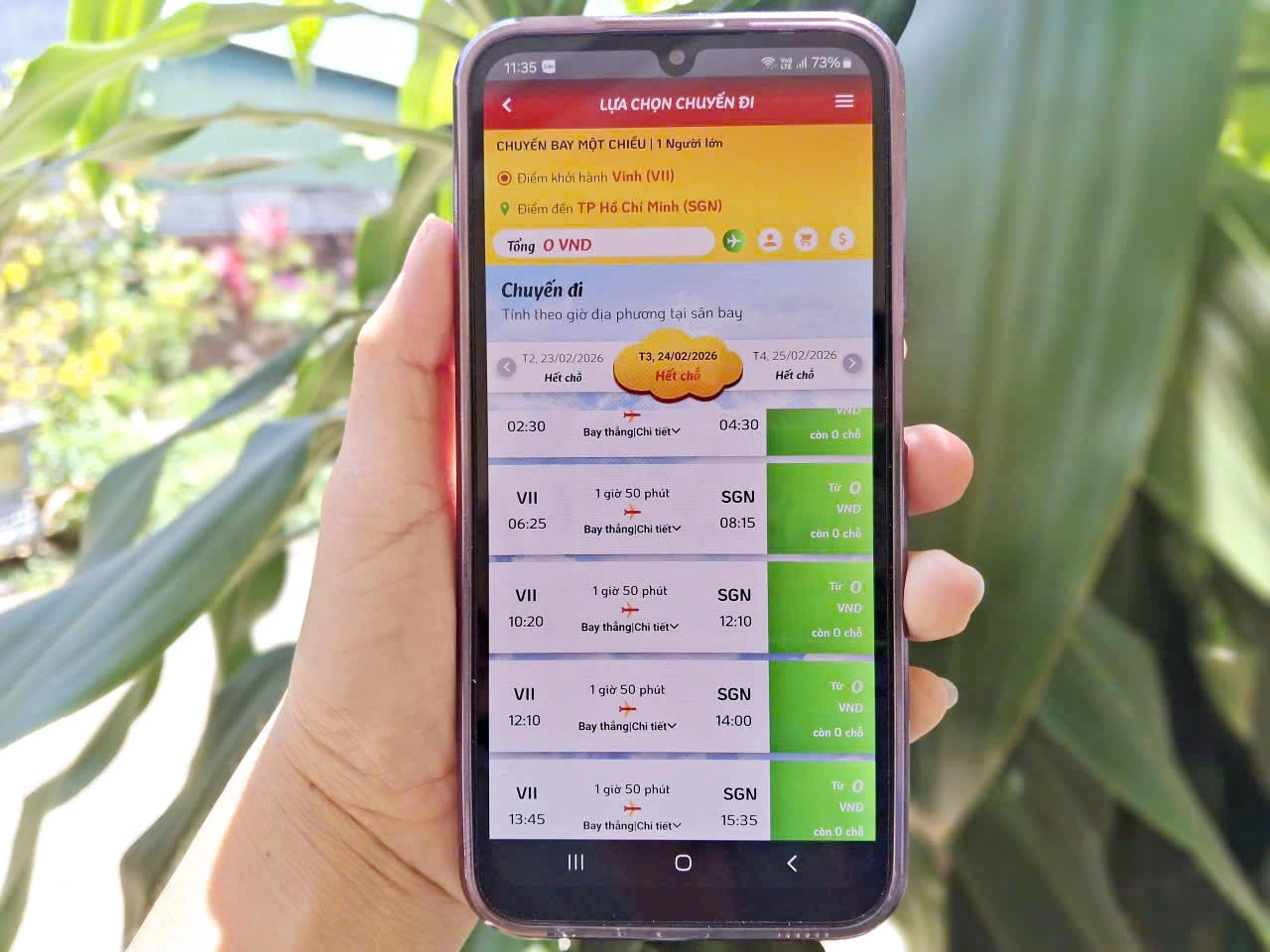

Vietnam’s post-Tet travel surge is pushing the country’s aviation system to its limits — with economy tickets to Ho Chi Minh City sold out on multiple routes and last-minute business-class fares climbing to nearly VND 6 million (around US$240) one way.
Between the fourth and ninth days of the Lunar New Year holiday, most flights into Ho Chi Minh City were fully booked. On the tenth day, many routes showed availability only in premium cabins.
For international executives, investors, and expatriates operating in Vietnam, the message is clear: post-holiday mobility into the country’s commercial hub now requires advance planning — or a premium budget.
Economy Seats Gone, Premium Prices Soar
Passengers across the country report difficulty securing tickets back to the southern metropolis after visiting family for Tet.
Routes from Chu Lai, Vinh, Con Dao, Dong Hoi, Hai Phong, and Nha Trang to Ho Chi Minh City were nearly full through February 26. Some flights still had seats, but largely in business class, priced between VND 4–6 million. Indirect routes — connecting via Hanoi or other hubs — pushed fares as high as VND 9–10 million.
For comparison, those prices are roughly double standard off-peak fares.
The demand spike has been particularly visible at Tan Son Nhat International Airport, Vietnam’s busiest airport. On February 22 (the sixth day of Tet), the airport handled nearly 178,000 passengers — its highest daily traffic on record — with inbound passengers significantly outnumbering departures.
In the north, Noi Bai International Airport recorded more than 124,000 passengers on its post-holiday peak day, also a historic high.
Airlines Added Capacity — But Demand Rose Faster
Carriers had anticipated strong travel demand for Tet 2026.
-
Vietnam Airlines and affiliated units supplied over 3.5 million seats, including expanded night flights.
-
Bamboo Airways increased fleet deployment and domestic capacity.
-
Vietravel Airlines added tour-linked services.
Yet a nine-day holiday period, combined with rebounding domestic tourism and rising international arrivals, outpaced supply.
Ticket agents report that even early bookers struggled to secure seats on high-demand routes. Some passengers rerouted creatively — traveling from secondary cities to Hanoi or Da Nang before continuing south — though those alternatives are now filling rapidly as well.
Rising Incomes, Rising Air Travel
Vietnam’s aviation boom reflects broader economic momentum.
According to government data, average monthly income in 2025 reached VND 8.31 million, up VND 756,000 year-on-year, while unemployment declined. Improved purchasing power is expanding discretionary spending on travel, including premium air tickets for time-sensitive business needs.
For Ho Chi Minh City — Vietnam’s financial and commercial engine — this means intensified post-holiday inflows as employees, entrepreneurs, and foreign managers return to work.
What This Means for Travelers and Businesses
-
Book early: Tet return flights are increasingly comparable to Golden Week-style demand in other Asian markets.
-
Expect price spikes: Premium cabins may be the only option during peak return windows.
-
Infrastructure strain continues: Without expanded airport capacity and fleet growth, peak-period pricing pressure is likely to persist.
Vietnam’s domestic aviation market remains one of Southeast Asia’s fastest growing. But for now, the post-Tet rush offers a clear lesson: in Vietnam’s reopening economy, demand is moving faster than supply.
Related
Discover more from Vietnam Insider
Subscribe to get the latest posts sent to your email.
Source: Vietnam Insider