

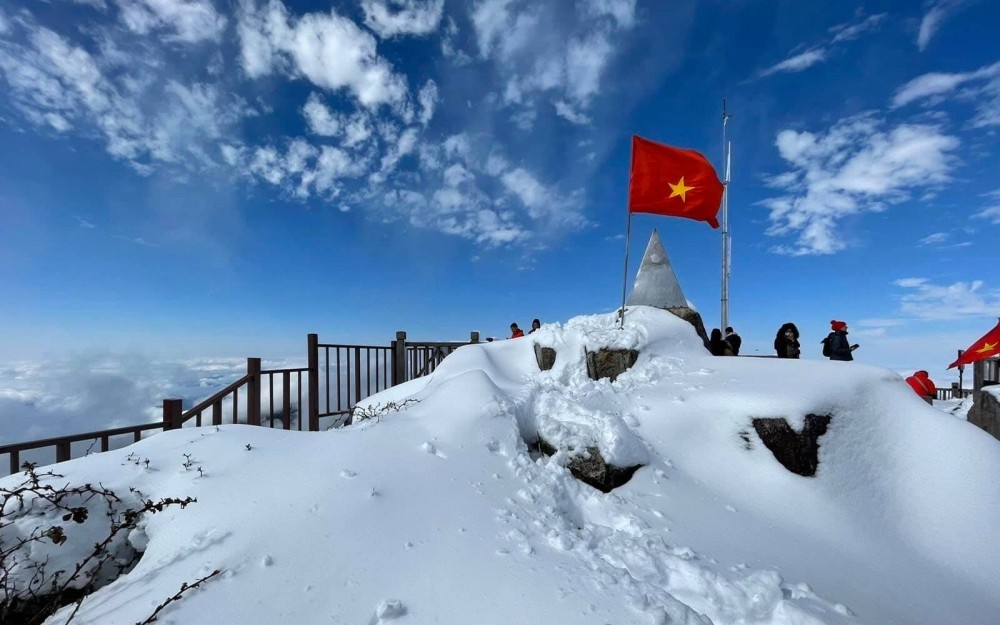

Rare cold snap creates thin ice sheets on Mount Fansipan, drawing tourists and signaling an unusually sharp winter shift in Southeast Asia.
The highest mountain in Indochina turned into an unexpected winter scene early Thursday as temperatures on Vietnam’s Mount Fansipan plunged to –3°C, freezing moisture in the air and coating the summit in a thin layer of ice. While icy conditions are common in northern Europe or North America, they remain rare in tropical Southeast Asia. The event underscores the region’s increasingly volatile weather patterns — a trend affecting tourism, agriculture, and cross-border climate planning.
At around 5 a.m. on November 21, representatives from Fansipan Legend confirmed that the sudden drop in temperature caused vapor to crystallize atop the iconic peak in Lào Cai Province. Wooden platforms at the summit were covered in a fragile frost that melted shortly after sunrise, around 7:30 a.m. Visitors rushed to capture photos and trace messages in the ice before it disappeared.
The cold front sweeping through northern Vietnam has also pushed temperatures in Hanoi down to 14–16°C at night, with clear skies and crisp daytime highs of 21–23°C. The northwest region is experiencing even sharper conditions, with some mountainous areas dipping below 12°C and facing risks of frost formation, a phenomenon that can impact winter crops.
For travelers, the icy display adds to Fansipan’s appeal as a rare “winter moment in the tropics.” For climate watchers, it raises questions about how El Niño cycles and shifting regional weather systems may reshape extreme-temperature events across Southeast Asia in the coming years.
Related
Discover more from Vietnam Insider
Subscribe to get the latest posts sent to your email.
Source: Vietnam Insider