

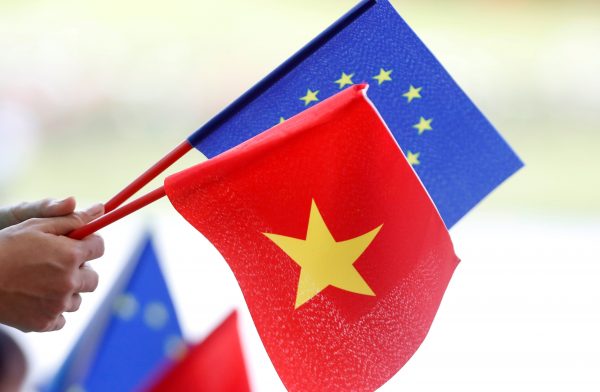

Trade, green transition, and security anchor a push to elevate EU–Vietnam relations to a comprehensive strategic level
As global supply chains fragment and geopolitical tensions intensify, the European Union is signaling a decisive pivot toward Vietnam—one of Southeast Asia’s fastest-rising economic and strategic hubs. The message is clear: Europe wants a deeper, more strategic partnership with Hanoi, not just to expand trade, but to anchor long-term cooperation across energy, security, and technology in an increasingly volatile world.
That signal was underscored ahead of the official visit to Vietnam by António Costa, described by Julien Guerrier as a milestone moment in the 35-year relationship between European Union and Vietnam. Coming shortly after Vietnam’s 14th National Congress, the visit carries both diplomatic symbolism and strategic intent, reflecting Europe’s desire to reinforce partnerships grounded in multilateralism and rules-based order.
At the core of this renewed engagement are three strategic pillars. The first is trade, where momentum is already evident. Since the Vietnam–EU Free Trade Agreement took effect in 2020, bilateral trade has surged by roughly 40%, reaching more than US$66.8 billion in the first 11 months of 2025. Yet Brussels sees Vietnam not as a finished success story, but as an underexploited gateway into ASEAN manufacturing, consumption, and resilient supply chains at a time when global trade faces mounting protectionist pressures.
The second pillar is the green transition, an area where Vietnam’s development priorities increasingly align with Europe’s climate agenda. Energy security, renewable power, and sustainable infrastructure have become central themes of EU–Vietnam dialogue, positioning Vietnam as a critical partner in Southeast Asia’s decarbonization push. For European investors and technology firms, this creates a pathway into fast-growing renewable energy markets while supporting Vietnam’s long-term economic resilience.
The third pillar—peace and security—reflects a broader geopolitical calculus. Cooperation now extends beyond diplomacy into maritime security and peacekeeping, including Vietnam’s participation in EU missions in Africa and coordination within ASEAN frameworks. For Europe, Vietnam’s role as a stable, internationally engaged actor in the Indo-Pacific is increasingly valuable amid rising regional tensions.
Beyond these pillars, Brussels and Hanoi are actively exploring new frontiers: digital transformation, semiconductors, advanced manufacturing, and secure digital value chains. With EU foreign direct investment in Vietnam approaching US$30 billion and Vietnam emerging as the EU’s largest trading partner in ASEAN, the economic logic for upgrading ties to a comprehensive strategic partnership is becoming difficult to ignore.
The larger takeaway for global investors and policymakers is this: Vietnam is no longer viewed by Europe simply as a low-cost manufacturing base, but as a strategic partner in trade diversification, energy transition, and regional stability. As the EU looks eastward to navigate a fractured global order, Vietnam may well become one of Europe’s most consequential relationships in Asia—raising a bigger question for the world: which other powers are moving fast enough to keep up?
Related
Source: Vietnam Insider