

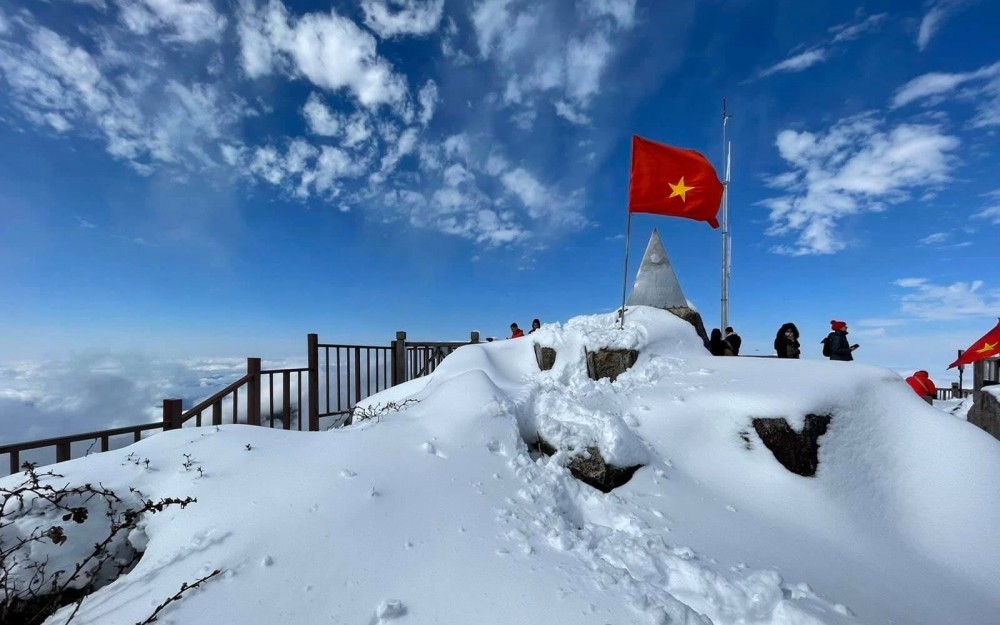

HANOI, Nov 3 (Vietnam Insider) — Northern Vietnam has been hit by an abrupt Arctic-style cold front that sent temperatures plunging to near-freezing levels across several northern provinces — an unusually harsh start to the cool season that’s now disrupting tourism, agriculture, and transport in the region.
The powerful cold surge, driven by an intensified continental air mass sweeping south from China, has blanketed much of North and North Central Vietnam in rain and biting winds since late Sunday. On Monday morning, temperatures on Mau Son Peak in Lang Son fell to just 10°C (50°F), the lowest recorded so far this season. Mountainous tourist destinations such as Sa Pa, Pha Din, and Tam Dao also dipped below 12°C (54°F), catching many visitors and residents off guard.
In Hanoi, the normally mild capital, locals woke to persistent drizzle and a sharp chill, with morning readings hovering between 17°C and 19°C (63°F–66°F). The cold spell is expected to linger for several days, keeping daytime highs suppressed across northern and north-central provinces.
The National Center for Hydro-Meteorological Forecasting (NCHMF) warned that the cold front’s impact will not be confined to lower temperatures. Heavy rains are forecast to continue along the coast from Ha Tinh to Quang Ngai, raising the risk of flash floods, landslides, and urban inundation — particularly in low-lying areas and key industrial corridors. Coastal regions are also facing strong winds and rough seas, posing hazards to shipping and fishing operations.
For the agricultural heartlands of the Red River Delta and northern highlands, the bigger worry lies in prolonged exposure to cold and damp conditions. Meteorologists have cautioned that livestock and poultry could suffer severe stress, while crops and seedlings may see stunted growth or rot if the chill persists. Rural officials have urged farmers to prepare insulation for barns and limit outdoor grazing.
Despite the current freeze, relief is on the horizon. AccuWeather projects temperatures in Hanoi and surrounding provinces will gradually climb by 1–2°C per day starting midweek, reaching a more comfortable 23–28°C (73–82°F) by the weekend.
For expatriates, travelers, and businesses operating in northern Vietnam, the Arctic blast serves as a stark reminder of the country’s growing climate volatility — and the importance of building resilience into both infrastructure and supply chains as weather extremes become more frequent.
Related
Discover more from Vietnam Insider
Subscribe to get the latest posts sent to your email.
Source: Vietnam Insider